Why Is San Diego Water So Hard? Effects on Pipes, Fixtures & Water Heaters
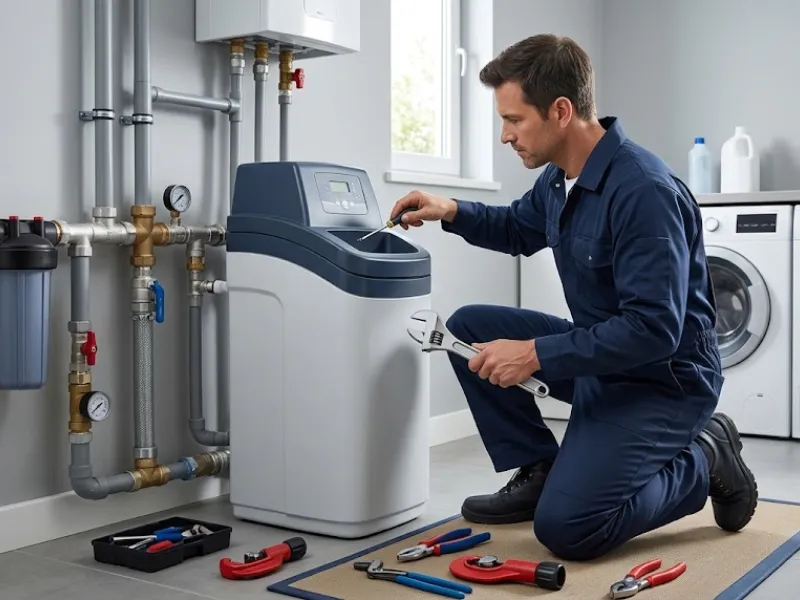
San Diego has some of the hardest municipal water in the United States, and that shapes how every home's pipes, fixtures, and water heater age. Most of our water doesn't fall from the sky locally. It is imported from the Colorado River and Northern California through the State Water Project, traveling hundreds of miles through mineral-rich rock before it reaches a San Diego tap. Along the way it dissolves calcium and magnesium — the minerals that define water "hardness" — and municipal treatment does not remove them.
The result is tap water averaging roughly 16 grains per gallon (gpg), or about 276 parts per million, with city readings commonly 16 to 18 gpg and county tests often landing between 16 and 25 gpg. The USGS classifies anything above 10.5 gpg as "very hard," which puts San Diego at roughly twice the national average. Hard water isn't a health risk, but it is a very real plumbing, appliance, and maintenance problem — and a hidden driver behind many of the leaks, clogs, and premature failures we repair across the county.
Below, we explain what hardness is, why our water is so hard, and what genuinely fixes it.
What "Hard Water" Actually Means
Water hardness is a measure of the dissolved calcium and magnesium it contains. These minerals occur naturally in soil and rock, and as water moves through limestone and other deposits, it picks them up and carries them into your plumbing. The more it absorbs, the "harder" it is.
Hardness is reported in grains per gallon (gpg) or parts per million (ppm). One gpg is roughly 17.1 ppm, so San Diego's 16 gpg is about 276 ppm. The USGS hardness scale is the reference most plumbers use:
| Classification | Grains per Gallon (gpg) | Parts per Million (ppm) | San Diego |
|---|---|---|---|
| Soft / slightly hard | 0 – 7.0 | 0 – 120 | — |
| Hard | 7.0 – 10.5 | 120 – 180 | — |
| Very hard | Above 10.5 | Above 180 | 16 – 25 gpg |
The key distinction: hard water is a plumbing problem, not a health problem. Calcium and magnesium are minerals your body needs and don't make water unsafe. What they do is leave scale and interfere with soap, which is why hardness matters to fixtures and appliances far more than to your doctor.
The one health-adjacent concern is sodium: traditional softeners swap calcium and magnesium for sodium. If you're on a low-sodium diet, keep a separate reverse-osmosis drinking water system for the kitchen tap.
Why San Diego's Water Is So Hard
San Diego County gets very little water from local sources. The vast majority is imported, and that journey is what makes our water hard.
Imported water, a long mineral-rich journey
Two sources supply most of the region: the Colorado River, delivered through the Metropolitan Water District's aqueducts, and the State Water Project, which moves water from Northern California hundreds of miles south. Crossing deserts and mineral-heavy terrain, the water dissolves calcium and magnesium from the rock it touches before it ever reaches San Diego.
Treatment doesn't remove hardness
Municipal treatment is designed to make water safe, not soft. Plants filter, disinfect, and adjust for corrosion control, but they do not strip out dissolved calcium and magnesium. Removing those minerals is a separate process — ion exchange or a similar conditioning method — that happens at the home, not the treatment plant.
Some neighborhoods test even higher
Because San Diego blends water from multiple sources, hardness shifts month to month and across the county. Inland and East County communities often test at the top of the range, and on-site tests commonly read 16 to 25 gpg. That's why a plumber sizing a softener for a home in El Cajon won't use the same numbers as one in La Jolla.
How Hard Water Damages Pipes & Fixtures
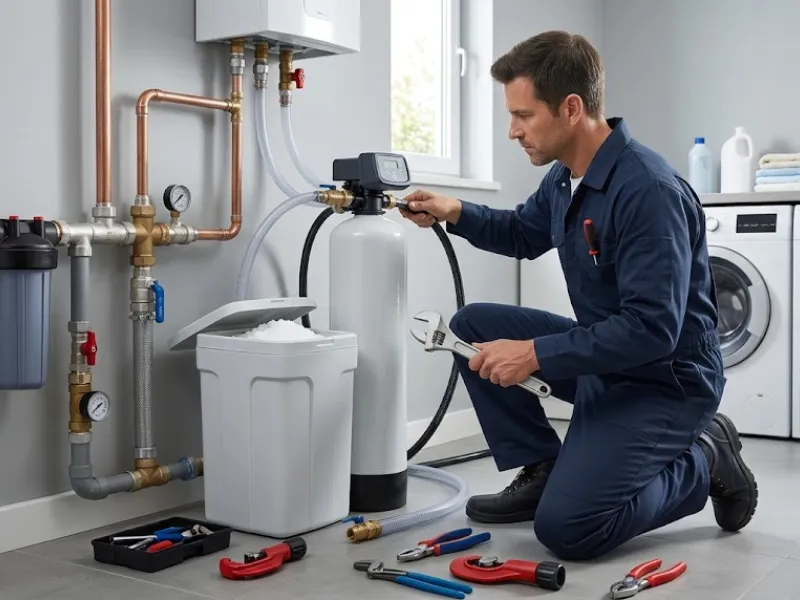
Scale is behind almost every hard-water problem. When water is heated or sits in a pipe, dissolved minerals can no longer stay in solution. They precipitate out and bond to the nearest surface as a chalky deposit called limescale, building up over months and years where you can't see it.
Scale narrows pipes and cuts pressure
Inside a supply line, scale accumulates on the pipe wall and reduces the interior diameter. With less room to move, flow and pressure drop — first at the fixtures farthest from the main, then throughout the house. In older homes, scale stacks on existing corrosion, narrowing a three-quarter-inch pipe to a fraction of that.
Fixtures take the visible hit
Faucets, aerators, and showerheads are where hardness becomes obvious: white crust, mineral-clogged aerators that spray sideways, and showerheads that lose pressure as the holes fill. Cartridges and valves wear faster because scale roughens their sealing surfaces. If fixtures are already failing, a fixture replacement or faucet service restores function — but new ones scale too unless the water is treated.
Corrosion and pinhole leaks
Hard water is also linked to corrosion. The mineral chemistry that forms scale can accelerate pitting in copper pipe, and those pits become pinhole leaks that drip quietly inside walls or under a slab. Repeated pinhole leaks in different spots mean the system is failing overall, at which point a whole-home repipe is usually smarter than patching one leak at a time.
The Water Heater Connection
No appliance pays a higher price for hard water than the water heater. This is where hardness does the most expensive damage.
Tank water heaters
When water is heated in a tank, dissolved minerals settle as sediment. That scale sits between the burner and the water, acting as insulation, so the heater runs longer and burns more gas. Nationwide a tank lasts 10 to 15 years, but in San Diego we commonly see 8 to 12, with hard water the leading reason. The U.S. Department of Energy notes that as little as a quarter inch of scale can raise energy use by up to about 40 percent.
Tankless water heaters
Tankless units aren't immune either: their narrow heat exchangers scale quickly, causing error codes and uneven hot water, and need periodic professional descaling here more often than in soft-water areas.
What helps
An annual flush removes sediment before it hardens, and a periodic anode rod check protects the tank from inside. If your unit is noisy or past its life, our guide to water heater repair and replacement signs can help. Either way, a tank or tankless system on treated water lasts dramatically longer.
Keep the heater at about 120°F. Higher temperatures make minerals precipitate faster, speeding sediment buildup and shortening the tank's life.
How Hard Water Shows Up in Your Home
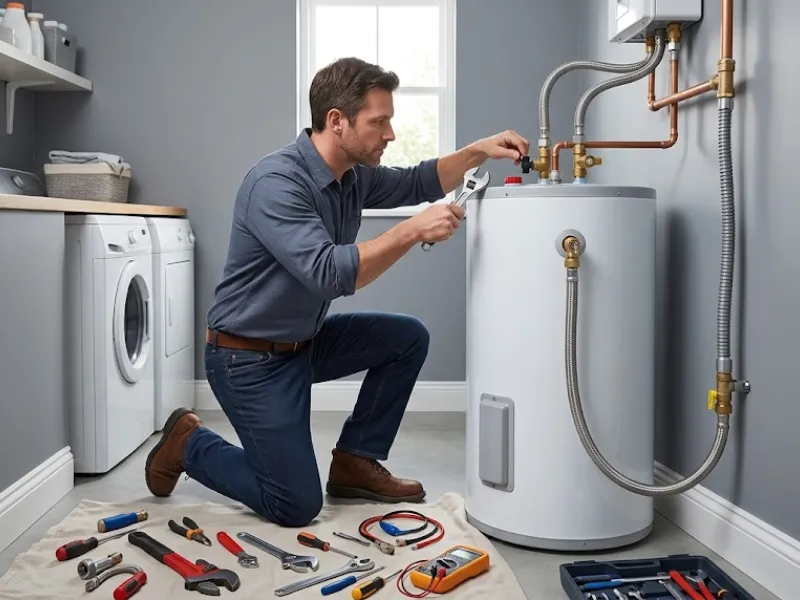
Hard water rarely announces itself with a single dramatic failure. It shows up as small annoyances and slow declines most homeowners blame on something else. If several sound familiar, hardness is likely the common thread.
- White crust and scale on faucets, aerators, showerheads, and the kitchen sink base.
- Spots on glassware and dishes that return the day after cleaning.
- Soap scum that coats shower walls, plus soap that won't lather.
- Dry skin and dull hair after washing, because soap doesn't rinse cleanly.
- Fading pressure at fixtures farthest from the water main.
- Recurring drain clogs, since scale traps hair, soap, and grease.
- Popping or rumbling from the water heater as sediment overheats.
Any one is inconvenient; several together usually mean the whole system is fighting the same problem.
What Actually Fixes Hard Water
Cleaning scale off a fixture treats a symptom. The real goal is to stop the minerals before they enter your pipes. The right method depends on your home, your plumbing layout, and local rules about salt discharge.
Whole-house water softener (ion exchange)
A traditional softener runs incoming water through a resin bed that swaps calcium and magnesium for sodium, producing genuinely soft water throughout the home. It is the most thorough fix and the best protection for pipes, fixtures, and the water heater. A professionally installed whole-house softener in San Diego typically runs about $1,500 to $3,500. See our water softener installation service for details.
Salt-free conditioners and TAC
Some San Diego County sewer districts restrict or prohibit the brine discharge traditional softeners produce. In those areas, a salt-free conditioner or template-assisted crystallization (TAC) system is the compliant choice. These units don't remove minerals or add sodium; they change how the minerals behave so they don't stick as scale. They're easier on plumbing, though they lack the soft, soapy feel of ion exchange.
Reverse osmosis for drinking water
Reverse osmosis is a point-of-use solution, usually under the kitchen sink. It forces water through a fine membrane that strips out minerals and other contaminants, producing great-tasting drinking water. It won't protect the whole plumbing system but pairs well with either whole-house treatment. Learn more on our water filtration page.
Professional descaling and PEX repipe
If scale has already narrowed your pipes or coated a heat exchanger, treating incoming water stops the damage from worsening but doesn't undo it. Professional descaling can restore flow in some systems, and when pipes are heavily scaled or corroded, a repipe with PEX resists scale far better than galvanized steel or copper. PEX is smooth and far less prone to mineral adhesion.
| Solution | What It Does | Best For | Notes |
|---|---|---|---|
| Whole-house softener | Removes calcium and magnesium | Whole-home protection | Adds sodium; needs a drain |
| Salt-free conditioner / TAC | Keeps minerals from sticking | Salt-restricted districts | No sodium; no soapy feel |
| Reverse osmosis | Removes minerals at one tap | Drinking and cooking water | Point-of-use only |
| Descaling / PEX repipe | Removes existing scale or replaces scaled pipe | Systems with buildup | Best long-term resistance |
Prevention & Maintenance
Whether or not you install treatment today, routine care goes a long way toward limiting hard-water damage.
- Flush your water heater annually to clear sediment before it hardens on the tank floor.
- Soak aerators and showerheads in white vinegar a few times a year to dissolve scale.
- Set the water heater to about 120°F to slow mineral precipitation.
- Wipe fixtures dry after use so minerals can't bond to chrome and stone.
- Descale tankless units on schedule per the manufacturer's guidance for hard water.
- Consider whole-house treatment to protect every pipe, fixture, and appliance.
Unsure how hard your water is? A licensed plumber can test it and size a system for your home. A&A Plumbing serves the city and all of San Diego County.
Frequently Asked Questions
Is San Diego water hard?
Yes. City of San Diego tap water averages about 16 gpg, or roughly 276 ppm, and commonly ranges from 16 to 18 gpg. That's well above the 10.5 gpg "very hard" threshold the USGS uses, making our water roughly twice the national average. County tests often read 16 to 25 gpg.
Is hard water a health risk?
No. Hard water is not a health hazard; calcium and magnesium are minerals your body needs. It's a plumbing and appliance issue, not a safety one. The one exception is sodium: softeners add it, so people on a low-sodium diet often keep a reverse-osmosis tap.
How does hard water damage a water heater?
Heating causes dissolved minerals to settle as sediment. That sediment insulates the water from the burner, so the unit runs longer and fails sooner — San Diego tanks commonly go at 8 to 12 years instead of 10 to 15. Tankless exchangers scale too and need descaling. The DOE notes a quarter inch of scale can raise energy use by up to about 40 percent.
How much does a whole-house water softener cost in San Diego?
A professionally installed whole-house softener in San Diego typically runs about $1,500 to $3,500, depending on capacity, plumbing layout, and whether new lines or drains are needed. Salt-free conditioners usually cost less and suit restricted sewer districts.
Can I install a softener if my district restricts salt discharge?
Some San Diego County sewer agencies restrict brine discharge from traditional softeners. There, a salt-free conditioner or TAC system — which uses no salt and adds no sodium — is often the compliant choice, with reverse osmosis handling drinking water. A licensed plumber can confirm your district's rules.
Ready to Stop Hard Water at the Source?
A&A Plumbing serves San Diego County with honest, upfront pricing and same-day service. We’ll test your water and explain your treatment options before any work begins.
Call (619) 637-5215