10 Signs Your Water Heater Needs Repair or Replacement
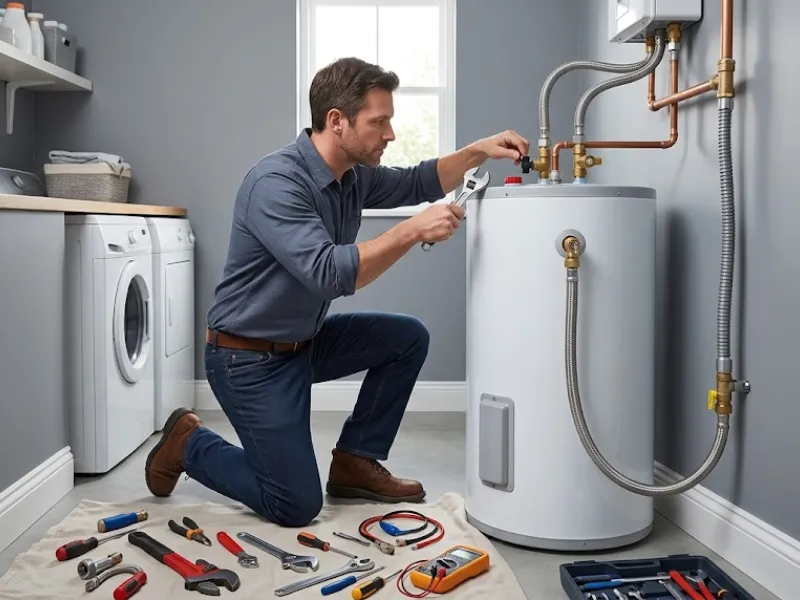
Your water heater is one of those appliances you never think about until the morning it stops delivering hot water. In San Diego, that morning tends to arrive earlier than it should. Our water is among the hardest in the country, and hardness slowly coats the inside of every tank and heat exchanger in the county. The good news is that water heaters almost never fail without warning. They rumble, they run out early, they leave rust in the hot water, and they leave moisture at the base long before the tank gives out.
Below are the ten signs we look for at A&A Plumbing when a San Diego homeowner calls about hot water. We explain what each one means, when a repair is worth it, when replacement is the smarter call, and how to stretch the life of the unit you already have. If you are dealing with a problem from our other guide, we cover the broader set of common plumbing problems in San Diego homes there too.
How San Diego's Hard Water Wears Out Water Heaters
San Diego's tap water averages about 16 to 18 grains per gallon (gpg), and on-site tests across the county frequently read 16 to 25 gpg. The U.S. Geological Survey considers anything above 10.5 gpg “very hard,” so our water sits well past that line. All of that dissolved calcium and magnesium has to go somewhere, and the water heater is where it does the most damage.
When water sits in a tank and heats up, minerals drop out of solution and settle on the bottom as sediment. In a gas water heater, that layer forms an insulating blanket between the flame and the water, so the burner fires longer to reach the set temperature. In an electric heater, sediment buries the lower heating element, which then overheats and burns out. Either way, the tank works harder every single day, and the metal eventually pays for it.
The result is a shortened lifespan. A tank water heater in a soft-water region commonly lasts 10 to 15 years. In San Diego, we routinely see them fail at 8 to 12 years, and units that never get flushed can give out sooner. Tankless heaters are not immune, either. Scale coats the heat exchanger, raises energy use, and eventually triggers error codes. If you want to understand the water itself, our post on how San Diego water hardness affects your home breaks it down in detail.
Drain a few gallons from your water heater twice a year and you will see the sediment for yourself. A clear stream means clean water; a gritty, cloudy flow means it is time for a full flush.
10 Warning Signs to Watch For
Water heaters give off signals for months, sometimes years, before the tank gives out. Here are the ten signs San Diego homeowners should watch for, roughly in order from “keep an eye on it” to “call today.”
1. The Unit Is More Than 8 to 10 Years Old
Every water heater has a data plate with a manufacture date or a serial number that encodes one. If yours is past eight years old, start paying attention. Age by itself is not a failure, but it changes the math: spending several hundred dollars to repair a nine-year-old tank with maybe two years left rarely makes sense. When a unit is 10 or older and needs a major repair, replacement is usually the better investment.
2. Rumbling, Popping, or Banging While It Heats
That noise is sediment. As the burner heats the tank, water trapped beneath the mineral layer flashes into steam and pops through. A little noise on an older heater is common, but loud, persistent rumbling that gets worse over time means the sediment is thick and the tank is straining. Sometimes a professional flush quiets it; if the unit has been noisy for years, the damage is often already done.
3. Rusty, Metallic, or Cloudy Hot Water
Run the cold tap first. If the cold water is clear but the hot water comes out discolored, the problem is inside the water heater, not your pipes. Rust in the hot water usually points to a corroded anode rod or a tank that is beginning to rust from the inside. An anode rod can be replaced. A rusting tank cannot.
4. Water Pooling or Moisture and Rust at the Base
A puddle, a damp ring, or streaks of rust around the bottom of the tank is the most serious sign on this list. Tanks corrode from the inside out, and a leaking tank generally cannot be repaired. Once a steel tank is compromised it will keep leaking, and the only reliable fix is a water heater replacement. If you see water at the base, shut off the unit and call a plumber.
5. Inconsistent or Fluctuating Water Temperature
If your shower swings hot to cold for no reason, or the water never seems to reach the temperature on the dial, the thermostat, heating element, or a dip tube may have failed. Sediment can also keep the thermostat from reading the water temperature accurately. This is usually a repairable problem, and it is worth diagnosing early because an overheating element is a short step from failure.
6. You Run Out of Hot Water Faster Than Before
A tank that used to fill the tub now gives you a quick shower. Sediment takes up space at the bottom of the tank, so the usable hot water capacity shrinks. A broken dip tube, which carries cold water to the bottom of the tank, causes the same symptom. If your household size has not changed but the hot water has, the heater is telling you something.
7. Your Energy Bills Are Creeping Up
A water heater working against a layer of scale runs longer and burns more gas or electricity. If your utility bills climb while your habits stay the same, compare them against the same months last year. A failing heater is a silent drain on efficiency, and the higher bills can quietly cover part of the cost of a replacement over time. Our guide to what plumbing repairs cost in San Diego can help you weigh that tradeoff.
8. Rotten-Egg Smell in the Hot Water
A sulfur or rotten-egg odor usually comes from bacteria reacting with a sacrificial anode rod, especially with certain water chemistries. A new anode rod or a thorough flush often solves it, and sometimes a professional sanitizing treatment is needed. The smell is unpleasant, but it is rarely a sign the tank itself is failing, so it is worth a repair before you consider replacement.
9. Pilot Light or Ignition Problems
Gas water heaters depend on a pilot light, a thermocouple, or an electronic igniter to fire the burner. A pilot that keeps going out, an igniter that clicks without lighting, or a burner that will not stay lit can be a simple thermocouple replacement or a sign of a gas supply or venting issue. Because this involves gas, it is a job for a licensed plumber, not a weekend experiment.
10. Visible Corrosion, Cracks, or a Leaking T&P Valve
Look for rust at the fittings, crust around the top connections, any crack in the tank, or water dripping from the temperature and pressure (T&P) relief valve. A T&P valve that weeps constantly can mean the tank is building too much pressure or the valve itself has failed. Corrosion and cracks in the tank body mean replacement; a failed valve can be swapped, but the cause should be checked at the same time.
If you see water at the base, smell gas, or watch the T&P valve discharge steadily, turn off the power or gas to the unit and call (619) 637-5215. A leaking pressurized tank can cause significant water damage in a short time.
Repair or Replace? How to Decide
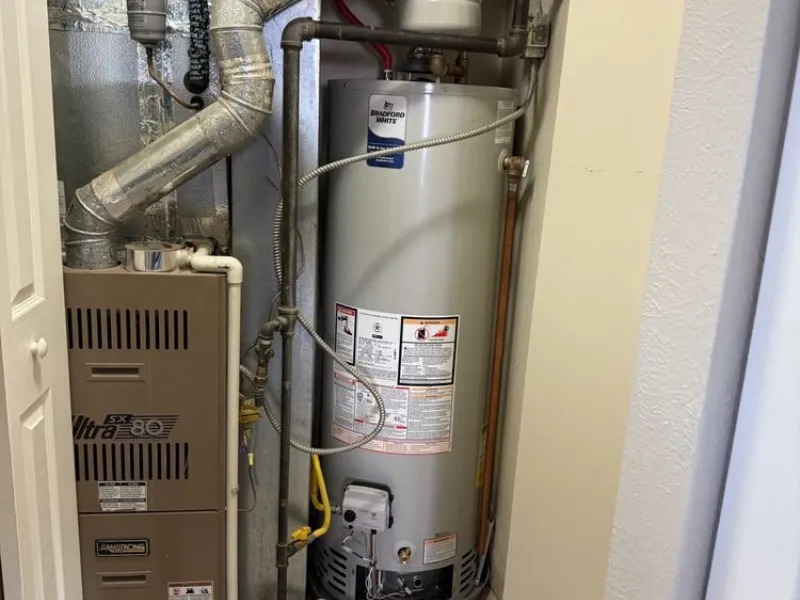
Not every problem means a new water heater. Some of the most common complaints — a failed heating element, a stuck thermostat, a leaking T&P valve, or a worn-out anode rod — are straightforward repairs. The decision comes down to the age of the tank, the cost of the repair compared with a new unit, and whether the tank itself is still sound.
Use this table as a starting point, then have a licensed plumber confirm the diagnosis before you spend money.
| Situation | Repair or Replace? | Why |
|---|---|---|
| Under 8 years old, one component fails (heating element, thermostat, T&P valve, anode rod) | Repair | The tank itself is still sound, so a part swap restores reliable hot water. |
| Tank is leaking or cracked | Replace | A pressurized steel tank cannot be patched reliably for the long term. |
| 10 years or older with any major failure | Replace | Remaining life is short, so repair money is often wasted. |
| Repeated repairs in a short span | Replace | Recurring failures signal an aging system that is near the end. |
| Widespread corrosion or rust | Replace | Corrosion weakens the tank and shortens whatever life remains. |
| Efficiency collapse: high bills and little hot water | Replace | Sediment and failed parts reach a point that is not worth reversing. |
| Noisy from sediment, unit under 8 years old | Repair & flush | Removing sediment can quiet a younger unit and restore efficiency. |
| Worn anode rod, tank otherwise sound | Repair | A new anode rod protects the tank from further corrosion. |
As a rule, repair makes sense when the heater is under about eight years old and a single component fails. Replace when the tank itself leaks, when the unit is 10 or older, when repairs keep piling up, when corrosion is widespread, or when efficiency has clearly collapsed.
Consider replacing if two or more of these are true:
- The tank is 10 years old or more.
- You have repaired it more than once in the last two years.
- There is rust, scale, or moisture around the tank base.
- Hot water runs out faster than it used to.
- Energy bills are rising with no change in usage.
What It Costs & What Affects the Price
Water heater pricing in San Diego depends on the type of unit, the size, the fuel source, and how much work is needed to bring the installation up to current code. Repairs typically cost a fraction of replacement, which is why diagnosing the problem first matters so much.
Common repairs include heating elements, thermostats, T&P valves, anode rods, and pilot or thermocouple assemblies. These are usually quick jobs with a clear parts cost. Replacement involves more than the tank itself. Permits, a drain pan, an expansion tank, new supply and gas flex lines, and proper venting all contribute to the total, and a straightforward swap costs less than a job that needs code upgrades.
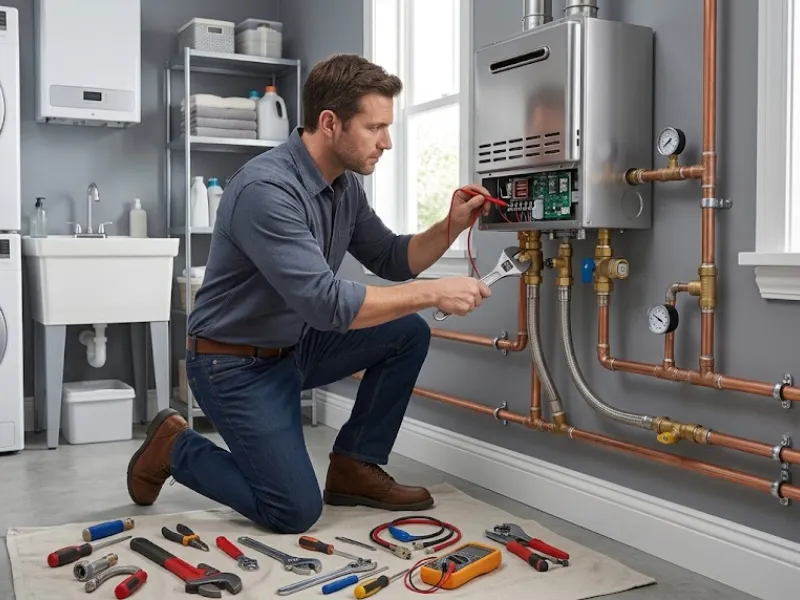
Upgrading from a storage tank to a tankless water heater costs more upfront but can lower energy use and free up floor space. In San Diego's hard water, though, tankless units must be descaled regularly to protect the heat exchanger. Our comparison of tank versus tankless water heaters walks through which option fits which home.
For a broader picture of local labor and parts pricing, see our guide to what plumbing repair costs in San Diego. For an exact number on your home, contact A&A Plumbing or call us and we will provide an upfront written quote before any work begins.
How to Make Your Water Heater Last
Most water heater failures in San Diego are driven by sediment, and sediment is manageable. A little routine care can add years to the life of a tank and protect the heat exchanger on a tankless unit.
- Flush the tank annually to clear sediment before it hardens onto the bottom. In high-hardness areas, twice a year is even better. Our water heater service team can handle the flush and inspect the unit at the same time.
- Replace the anode rod every few years. This sacrificial rod corrodes instead of the tank. Once it is consumed, the tank itself starts to rust.
- Keep the thermostat at about 120°F. Higher temperatures make minerals precipitate out of the water faster, which speeds up sediment buildup and wastes energy.
- Treat the hard water at the source. A whole-house water softener removes the calcium and magnesium that cause scale in the first place, protecting the heater and every other appliance.
- Test the T&P valve once a year to confirm it opens and reseats, which protects the tank from dangerous pressure.
- Descale tankless units on the schedule the manufacturer recommends, usually once a year in San Diego.
- Schedule a professional inspection every year or two, especially once the unit passes year eight.
If hard water has already done damage to your plumbing beyond the heater, a repipe or pipelining evaluation can tell you whether scale is restricting flow in the supply lines as well.
Flushing a tank and testing a T&P valve are reasonable homeowner tasks. Anything involving the gas burner, the electrical connections, or a leaking tank should go to a licensed plumber. Gas work and pressure issues are not worth the risk.
Frequently Asked Questions
How long do water heaters last in San Diego?
A tank water heater typically lasts 10 to 15 years in soft-water regions, but in San Diego's hard water we commonly see them fail at 8 to 12 years. Without annual flushing, some units give out even sooner. Tankless water heaters can last 20 years or more, but they must be descaled regularly to survive the county's 16 to 25 gpg water.
How do I know if my water heater needs to be replaced?
Replace a water heater when the tank itself is leaking or cracked, when the unit is 10 years or older and needs a major repair, when repairs keep piling up, when corrosion is widespread, or when efficiency has clearly collapsed. A leaking steel tank cannot be repaired reliably, so water at the base is the clearest sign that replacement is the right call.
Can a water heater be repaired instead of replaced?
Yes. If the heater is under about eight years old and a single component fails, a repair usually makes sense. Common repairable parts include the heating element, thermostat, T&P relief valve, and anode rod. Once the tank itself rusts through or leaks, however, replacement is the only lasting solution.
Why does my hot water smell like rotten eggs?
A sulfur or rotten-egg odor in hot water usually comes from bacteria reacting with the sacrificial anode rod, especially with certain water chemistries. Replacing the anode rod, flushing the tank, or in some cases a professional sanitizing treatment usually solves the problem. The odor is unpleasant but rarely means the tank itself is failing.
How much does water heater replacement cost in San Diego?
Water heater pricing in San Diego depends on the type, size, fuel source, and how much work is needed for code compliance. Replacement involves more than the tank: permits, a drain pan, an expansion tank, new supply and gas lines, and proper venting all affect the total. A&A Plumbing provides an upfront written quote before any work begins, so there are no surprises.
No Hot Water or a Leaking Tank?
A&A Plumbing serves San Diego County with honest, upfront pricing and same-day service for water heater repair and replacement. We’ll diagnose the issue and explain your options before any work begins.
Call (619) 637-5215