Why Is My Water Pressure Low? Common Causes in San Diego Homes

Few things are as frustrating as stepping into the shower expecting a strong spray and getting a tired trickle instead. Low water pressure is one of the most common calls we get at A&A Plumbing, and one of the most misunderstood. The fix is rarely as simple as turning up a valve or swapping a fixture.
The good news is that low pressure almost always leaves clues. Whether it shows up at one fixture or throughout the house, all the time or only when two things run at once, tells you a lot about the cause. This guide covers the problems we see most often in San Diego, how to tell them apart, and when to call a licensed plumber.
First, Is It One Fixture or the Whole House?
Before you touch a valve, answer one question: is the problem at one tap, or everywhere? That distinction cuts the possible causes roughly in half and is the first thing our technicians test.
Here is a simple way to check it yourself:
- Open one cold tap closest to where the water enters your home. Note the flow.
- Open a second tap on the other side of the house, and then a shower, so several fixtures are running at once.
- Watch what happens. If only one fixture was ever weak, the issue is local. If every fixture is weak, or flow collapses when a second opens, the problem is in your supply system.
That second scenario — pressure that drops the moment two fixtures run together — means your pipes can no longer deliver enough volume, not that your pressure setting is wrong. In older San Diego homes, that usually points to scale and corrosion inside the pipe.
Causes at a Single Fixture
If weak flow is confined to one faucet, shower, or tub, the cause is almost always small and inexpensive. Three culprits account for most single-fixture complaints.
Clogged aerator
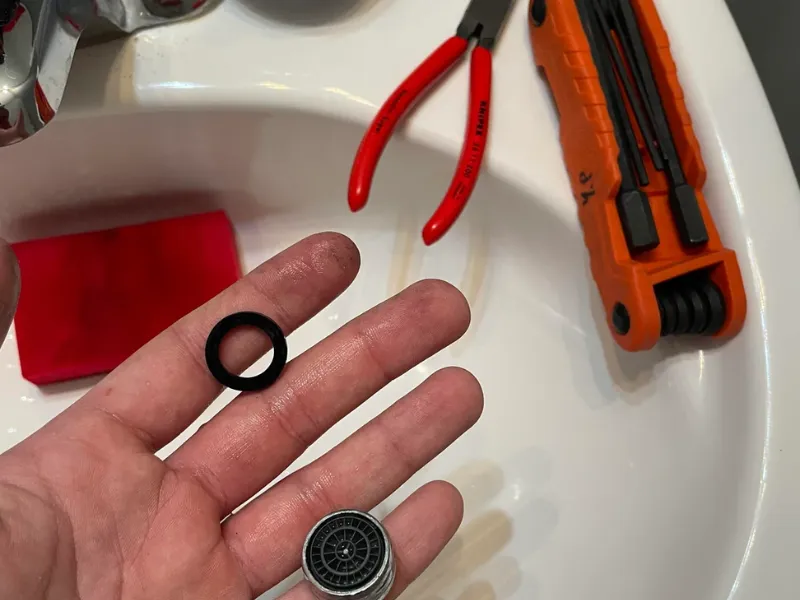
The aerator is the small screen at the tip of your faucet. It mixes air into the water and smooths the flow, but it also traps mineral grit and debris. Once it clogs, the faucet can lose most of its pressure even though the supply behind it is fine. Unscrew the aerator, clean the screen, and soak the parts in white vinegar to dissolve mineral deposits. If it is badly crusted, replacing it costs just a few dollars.
Mineral-blocked shower cartridge
Shower valves rely on a cartridge to balance hot and cold water. In hard water, scale builds up on the cartridge and restricts flow. If your shower alone is weak while the tub spout and sink run fine, the cartridge is the likely cause. It can sometimes be cleaned, but a worn cartridge is best replaced — a job covered by professional faucet replacement and repair.
Partially closed shutoff valve
Every fixture has a shutoff valve somewhere nearby, and those valves get bumped or left partly closed during repairs. A valve that is only a quarter turn open will starve the fixture of water. Check that the shutoff under the sink or behind the access panel is fully open before you assume anything is broken.
Soak removable aerators and showerheads in white vinegar overnight to dissolve calcium and magnesium. If the buildup returns within a few weeks, the problem is your water, not your cleaning routine — a whole-house water softener addresses the source.
Whole-House Pressure Problems
When pressure is weak at every tap, the cause lives between the city main and your fixtures. These are the four whole-house problems we diagnose most often.
Scale narrowing aging pipes
Mineral scale does not just sit on fixtures; it coats the inside of the supply pipes, gradually shrinking the opening water can pass through. Over years, a pipe that once flowed freely can lose much of its diameter, and with it, your pressure.
A failing pressure-reducing valve
Most San Diego homes have a pressure-reducing valve, or PRV, where the main line enters the house. It brings the city's incoming pressure down to a safe range, typically 50 to 80 psi. When a PRV fails, it usually fails closed, and pressure throughout the home drops. It is a wearable part and one of the most common failures we replace.
A main or supply line issue
If the problem is at the main shutoff valve, the meter, or the supply line from the street, no amount of fixture cleaning will help. A partially closed main valve, a corroded service line, or a break between the meter and the house can all restrict flow.
A hidden leak
A leak on the supply side siphons off water and pressure before it reaches your fixtures. Because it is often under a slab or inside a wall, the only clue may be a rising water bill and pressure that keeps worsening.
- Pressure that has steadily dropped over months or years
- Rust-colored or metallic-tasting water
- Banging or rattling pipes when appliances run
- Warm spots on the floor, which can indicate a slab leak
These symptoms point to failing supply lines. Rather than swapping fixtures, have the system evaluated by a professional leak detection and repair specialist who can confirm whether a leak is stealing your pressure.
How San Diego's Hard Water Fits In
San Diego's water is genuinely hard, and that is central to why low pressure is so common here. Most of our supply travels hundreds of miles from the Colorado River and Northern California, picking up calcium and magnesium along the way.
- City water averages about 16 to 18 grains per gallon (gpg) according to the City of San Diego. The USGS calls anything above 10.5 gpg “very hard,” and on-site tests across the county often read 16 to 25 gpg, higher inland and in East County.
- Galvanized steel pipes corrode from the inside out. Many homes built before 1980 still have these lines. Rust and scale narrow the internal diameter until flow is strangled and the pipe eventually blocks or bursts. We regularly pull galvanized pipe so restricted that a 3/4-inch line has shrunk to under a quarter inch inside.
- PEX resists scale best. Modern PEX tubing has a smooth interior that resists mineral buildup far better than old steel, so it holds pressure for decades. Copper lasts well too, though hard water can pit it over time.
If you want the full picture of what hard water does to pipes, fixtures, and appliances, our guide to San Diego water hardness effects breaks it down in detail.
How a Plumber Diagnoses Low Pressure
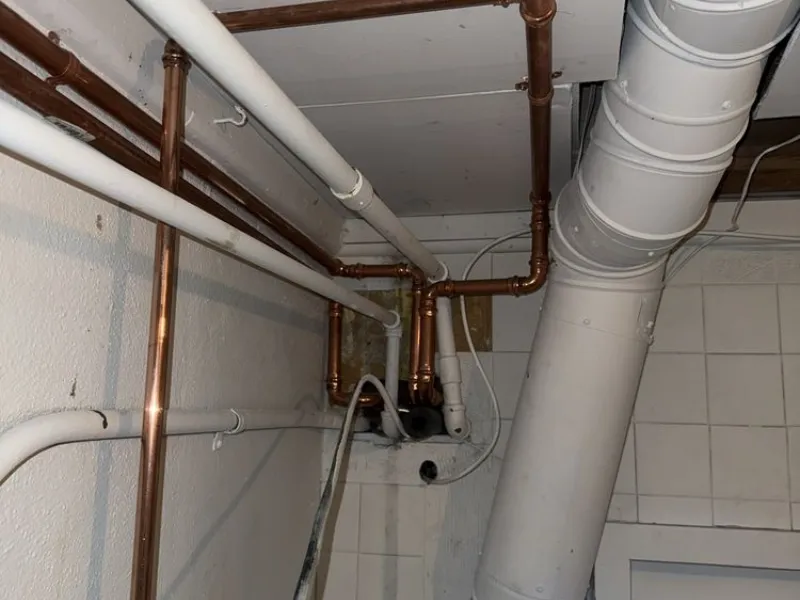
Because low pressure has so many possible causes, the key is a methodical process instead of guessing. Here is the sequence we follow.
- Compare pressure at multiple fixtures. This confirms whether the problem is local or system-wide and gives a baseline for measuring improvement.
- Check the PRV. We test the static pressure and inspect the pressure-reducing valve. If it is set below the correct range or has failed, that alone can explain the whole house.
- Run a whole-house static pressure test. This measures the pressure at rest versus the pressure with fixtures flowing. A big drop under flow points to restricted pipes rather than a pressure-setting problem.
- Perform leak detection or recommend a repipe. If pressure is normal at rest but collapses under use, or there are leak symptoms, we move to leak detection. If the pipes themselves are the bottleneck, we discuss repiping.
| Symptom | Likely Cause | First Step | DIY or Pro? |
|---|---|---|---|
| One faucet weak, others fine | Clogged aerator | Clean or replace the aerator | DIY |
| Only the shower is weak | Mineral-blocked cartridge | Clean or replace the cartridge | Pro |
| One fixture starved of water | Partially closed shutoff valve | Open the valve fully | DIY |
| Whole house weak, steady | Failing pressure-reducing valve | Test and replace the PRV | Pro |
| Pressure drops when two fixtures run | Scale-narrowed or corroded pipes | Static pressure test, then repipe | Pro |
| Whole house weak + higher water bill | Hidden leak on main or supply line | Professional leak detection | Pro |
| Rusty or metallic-tasting water | Corroded galvanized or copper pipe | Repipe affected lines | Pro |
| Warm floor spots + falling pressure | Slab leak | Slab leak detection and repair | Pro |
Never try to fix low pressure by simply raising the PRV. If the real cause is a leak or internal corrosion, higher pressure pushes more water out of the leak or stresses already-weakened pipe. Diagnose first, then adjust.
Repair vs. Repipe
Once the cause is known, the fix usually falls into one of two categories: a targeted repair, or replacing the pipes themselves.
A targeted repair is the right call when the problem is isolated — a failed PRV, a single clogged cartridge, or a single damaged section of pipe. These fixes are fast and comparatively inexpensive.
A whole-home repipe makes more sense when low pressure is caused by the pipes themselves. If you have galvanized steel or polybutylene lines, if pressure has declined steadily for years, or if you are patching leaks in different spots, repiping removes the failing material instead of chasing symptoms. Modern PEX or copper restores full flow and is largely immune to the scale that started the problem. For a clear picture of what each path costs, see our guide to how much plumbing repair costs, and for the broader set of issues that show up in older homes, read common plumbing problems in San Diego homes.
How to Protect Your Pressure
Whether you repair or repipe, a few habits will keep your pressure strong and your pipes healthy for years.
- Clean faucet aerators and showerheads a few times a year to keep mineral buildup from choking individual fixtures.
- Soften the water at the source. A properly sized water softener stops scale before it coats your pipes and fixtures.
- Check your PRV periodically. If household pressure has drifted below 50 psi, have the valve tested rather than ignored.
- Watch for warning signs like rusty water, noisy pipes, or a creeping water bill, and act early.
- Schedule a professional inspection every year or two, especially in homes built before 1980.
If you have any doubt about what is causing your low pressure, our team at A&A Plumbing can test the system, explain your options, and give honest pricing before any work begins. Call (619) 637-5215 or reach us through our contact page.
Frequently Asked Questions
Why is my water pressure low in my San Diego home?
If only one fixture is weak, the cause is usually a clogged aerator, a mineral-blocked shower cartridge, or a partially closed shutoff valve. If pressure is low throughout the house, the likely culprits are scale narrowing aging pipes, a failing pressure-reducing valve, a problem with the main or supply line, or a hidden leak.
Does San Diego's hard water cause low water pressure?
Yes. San Diego tap water averages about 16 to 18 grains per gallon, and on-site tests across the county commonly read 16 to 25 gpg. That scale narrows the opening and reduces flow. Galvanized steel pipes in pre-1980 homes are especially vulnerable because they corrode and lose internal diameter.
What water pressure should a home have?
Most homes operate best between roughly 50 and 80 psi of static pressure, the range a pressure-reducing valve is set to. If pressure measures well below 50 psi, or drops sharply when a second fixture runs, the system needs a professional evaluation.
Will a repipe fix low water pressure?
If low pressure is caused by scale and corrosion inside old galvanized steel or pitted copper pipes, repiping with copper or PEX restores full flow and stops the problem from returning. A repipe will not fix a clogged aerator, a failing pressure-reducing valve, or a leak, so proper diagnosis comes first.
Can low water pressure be a sign of a leak?
Yes. A hidden leak on the main or supply line can drop pressure throughout the home. Other signs include a rising water bill, running water when everything is off, rusty or metallic water, and warm floor spots that can indicate a slab leak. Have a plumber perform leak detection before adjusting pressure.
Still Dealing With Weak Water Pressure?
A&A Plumbing serves San Diego County with honest, upfront pricing and same-day service. We’ll diagnose the real cause and explain your options before any work begins.
Call (619) 637-5215