San Diego Plumbing Code: What Homeowners Should Know Before a Plumbing Project
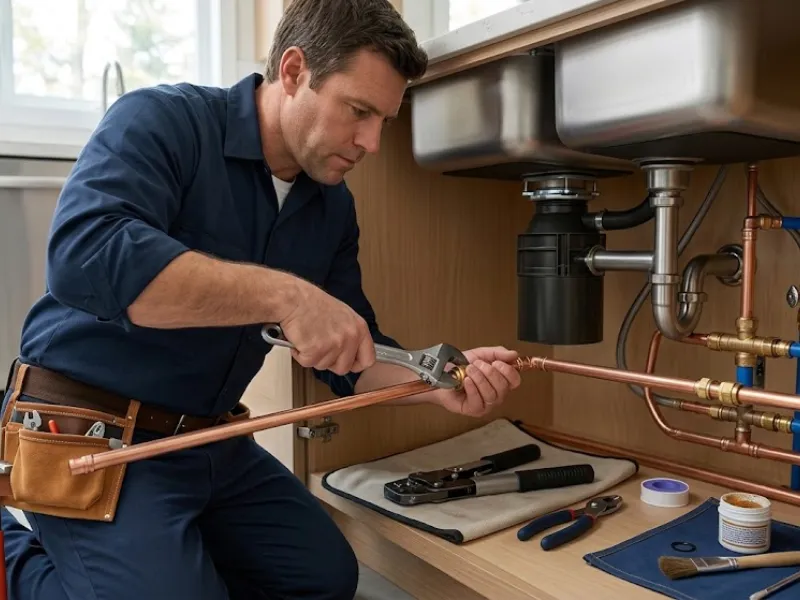
Planning a plumbing project in San Diego involves more than picking out fixtures and comparing bids. Nearly every job that touches the water, drain, or gas system in a home falls under the California Plumbing Code (CPC), a set of standards the state adopts and local building departments enforce through permits and inspections. Understanding the basics before you start helps you ask better questions, avoid failed inspections, and protect your family, your insurance coverage, and your home's resale value.
This guide walks through the code areas San Diego homeowners encounter most often, from water heater and gas line requirements to drain slope, backflow prevention, and approved pipe materials. It is general educational information, not legal advice, and codes change over time. Always confirm the current requirements and any local amendments with the authority having jurisdiction (AHJ) for your address before any work begins.
Why Plumbing Codes Matter for San Diego Homeowners
Plumbing codes exist for one main reason: to keep water and gas systems safe. The rules cover everything from how thick a gas pipe must be for a given length to how far a water heater's relief valve discharge must sit above the floor. These details rarely show up on a punch list, but they are exactly what prevents fires, explosions, carbon monoxide exposure, and water damage.
Safety comes first with gas and hot water
The most serious code violations involve gas lines and water heater combustion and venting. An undersized gas line can starve an appliance, a poorly connected vent can spill combustion gases into a home, and a missing or blocked temperature and pressure relief valve can turn a water heater into a pressurized hazard. These are not areas where shortcuts pay off.
Insurance claims and resale inspections
Insurance companies increasingly ask whether work was permitted and inspected. If a burst supply line or a water heater failure is traced to unpermitted plumbing, a claim can be delayed or denied. On the resale side, a buyer's inspector and lender often flag unpermitted work, which can stall a sale until it is corrected. Pulling the right permit up front is far cheaper than fixing it later.
This article is general information, not legal advice. The California Plumbing Code updates on a regular cycle, and cities across San Diego County adopt their own amendments. Before any project, confirm the current requirements with your local building department, which is the authority having jurisdiction over your property.
How the California Plumbing Code Works
California adopts the California Plumbing Code, which is based on the Uniform Plumbing Code (UPC) published by the International Association of Plumbing and Mechanical Officials. The state then layers on amendments, and individual cities and counties can add their own. That is why the same water heater swap can have slightly different inspection expectations in the City of San Diego, Chula Vista, or Escondido.
A model code plus local amendments
The UPC provides the baseline for pipe materials, sizing, venting, drainage, fixtures, and gas systems. Local amendments adapt those rules to regional conditions. In San Diego County, seismic strapping of water heaters and water-conservation requirements are good examples of rules that reflect our specific environment and drought history.
Permits and inspections are how the code is enforced
A permit is essentially the city's approval to do the work, and an inspection is the verification that it was done correctly. Plumbing permits typically require at least one inspection, and some projects need a rough-in inspection before walls close and a final inspection after the work is complete. Skipping either step leaves no record that the job meets code. Our overview of San Diego plumbing permits explains the process in more detail.
Water Heater Code Requirements
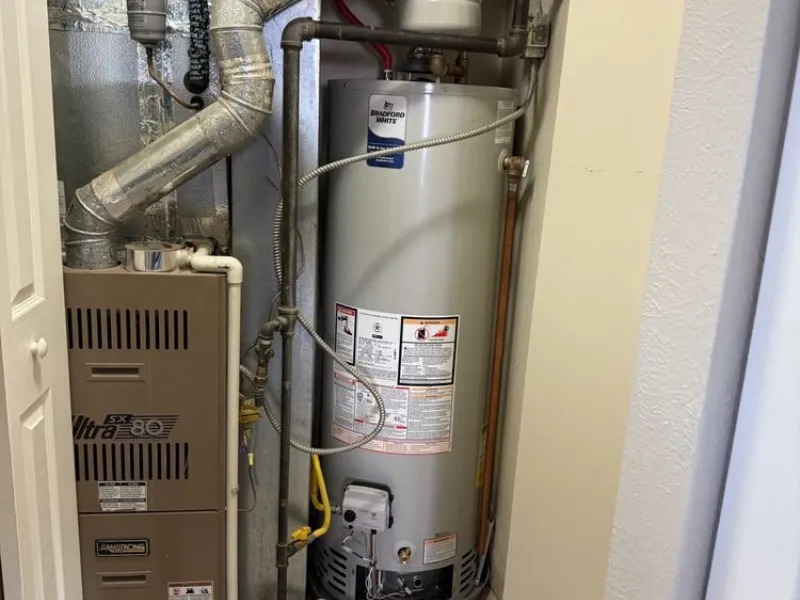
Water heater installation is one of the most code-heavy jobs in a home, and it is also one of the most common. A compliant installation covers safety devices, drainage, anchoring, and combustion air. Whether you are replacing a tank unit or upgrading to a tankless system, these elements matter.
Temperature and pressure relief and discharge piping
Every water heater must have a temperature and pressure (T&P) relief valve rated for the tank, with discharge piping that runs in an approved material to a safe point of disposal. The pipe must not be capped, trapped, or threaded at the end, and it must terminate where scalding water cannot injure anyone.
Expansion tank and drain pan
A closed plumbing system needs a thermal expansion tank to absorb pressure as water heats and expands. A drain pan beneath the heater, piped to an approved drain or the exterior, protects floors and framing when a tank eventually leaks. Both are routine inspection items.
Seismic strapping, venting, and combustion air
California requires water heaters to be strapped or anchored against earthquake movement, typically with two straps in the upper and lower thirds of the tank. Gas units also need a properly sized and connected vent and an adequate supply of combustion air. Faulty venting or blocked combustion air is a serious safety risk and a common reason inspections fail.
Ask your plumber to show you the permit and the inspection sign-off after a water heater replacement. It is your proof that the T&P valve, expansion tank, drain pan, strapping, and venting were all reviewed. You can learn more about compliant installs on our water heater services page.
Gas Line Sizing, Venting, and Leak Testing
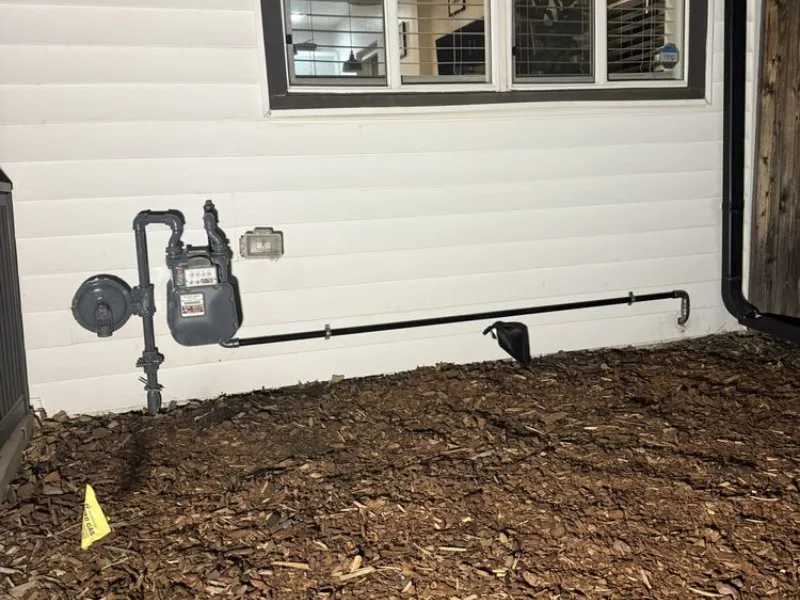
Gas work is the area where code compliance matters most, because the consequences of a mistake are severe. The code governs how gas pipe is sized, what materials are approved, how it is supported and protected, and how it must be tested before it is placed in service.
Sizing and materials
Gas pipe must be large enough to deliver the required volume to every appliance at once without a dangerous pressure drop. Undersized lines cause weak flames and incomplete combustion. Approved materials and fittings are specified, and connections must be made with methods suitable for gas service.
Leak testing and venting
New or altered gas piping is pressure-tested before it is used, and leaks must be located and repaired rather than taped over. Appliance venting must also be inspected for proper draft and safe termination. Carbon monoxide is odorless, so professional testing is not optional. Our team handles this work through our gas line repair and replacement service.
If you smell gas, leave the building, avoid switches and open flames, and call your gas utility and a licensed plumber. Gas line installation, repair, and combustion or venting work should always be performed by a licensed professional and inspected. This is not a homeowner project.
Backflow Prevention and Cross-Connection Control
Backflow is the unwanted reverse flow of contaminated water into the clean water supply. It happens when pressure in the public main drops and water is siphoned backward from a home or irrigation system. Codes require physical protections to stop this from occurring.
Common backflow protections
- Hose-bibb vacuum breakers on outdoor spigots to prevent water from being drawn back into the home supply.
- Double check valve assemblies used for many irrigation and fire-sprinkler connections.
- Reduced pressure zone (RPZ) assemblies for higher-hazard applications, which require annual testing by a certified tester.
Homeowners with irrigation systems, pools, or certain commercial setups may be required to have a backflow assembly tested on a schedule. If you are adding plumbing or a new water-using system, a licensed plumber can confirm what protection applies and whether testing is required for your property. Our plumbing installation team handles these connections.
Water Softener Drain and Air Gap Requirements
San Diego's hard water makes water softeners popular, and their installation has code requirements that are easy to overlook. The biggest one is how the unit drains and how it is protected from cross-connection.
Air gap and drain connection
A water softener discharges brine during regeneration, and that drain must have a proper air gap so wastewater can never be siphoned back into the potable supply. The discharge must also connect to an approved drain point without creating a cross-connection. Local rules on softener discharge and drain connections vary, so confirm what your city allows before installation.
Backflow and system protection
Softeners also need to be protected with the appropriate backflow method and installed so the drain cannot be blocked. Because sizing, drain routing, and bypass arrangements differ by home, this is a job best matched to your water quality and plumbing layout. Visit our water softener services page for more on how these systems work.
Approved Pipe Materials: PEX, Copper, and CPVC
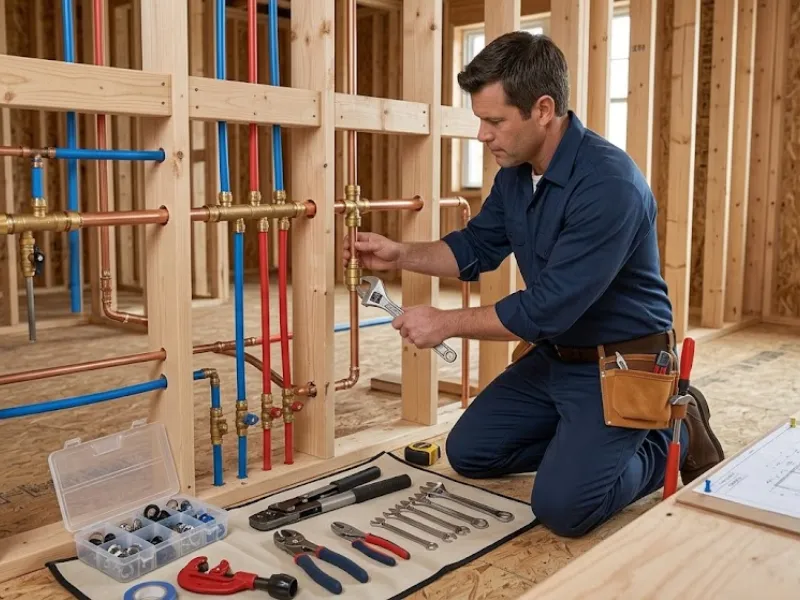
Not every pipe is approved for every use. The code lists acceptable materials and the conditions under which each may be installed, and using the wrong material or a non-listed fitting is a common inspection failure.
- PEX. Cross-linked polyethylene is widely used for residential water supply and is allowed under the California Plumbing Code when installed with approved fittings, correct support spacing, and protection from sunlight and physical damage. Some locations and applications carry restrictions or local amendments.
- Copper. Durable and trusted for supply lines, copper must be joined with approved methods and protected from conditions that accelerate corrosion. It remains a common choice for repipes and exposed runs.
- CPVC. Chlorinated polyvinyl chloride is approved for certain hot and cold water distribution uses. It must use the correct solvent cement and be supported per code.
What matters is not which material is trendy, but whether the specific product, fittings, and installation method are approved for your application and climate. A licensed plumber matches the material to the job and documents it in the permit. Our guide to common plumbing problems in San Diego homes explains how older galvanized and copper systems often reach the point where replacement is the better route.
Drain Slope, Venting, and Shutoff Valves
The drain and vent side of the code gets less attention from homeowners than water heaters and gas, but it determines whether waste leaves your home efficiently and whether sewer gases stay out of it.
Proper drain slope
Drain pipes must be pitched at an approved slope so gravity carries waste and water downstream. Too little slope and solids settle; too much and the water runs off leaving debris behind. Both cause recurring clogs. The correct fall is measured and specified rather than guessed.
Venting
Every fixture drain needs proper venting to allow air into the system so traps don't siphon and sewer gas doesn't enter the home. Vent design, size, and termination are all code items, and they are inspected because mistakes create health and odor problems.
Required shutoff valves
Fixtures and appliances generally need accessible shutoff valves so water can be isolated quickly during a repair or emergency. A toilet, sink, or water heater without a working shutoff can turn a small leak into a flooded room. When a plumber installs or replaces fixtures, adding or correcting shutoffs is part of doing the job right.
Fixtures, Water Conservation, and Pipe Support
California's water-conservation standards mean the fixtures sold and installed here must meet maximum flow and volume limits. Toilets, showerheads, and faucets are rated for efficiency, and replacing an old toilet or showerhead with a compliant model is often required during a remodel or permitted project.
- Low-flow fixtures. Toilets, showerheads, and aerators must meet current efficiency standards, which reduce water use without sacrificing performance when chosen well.
- Fixture approvals. Plumbing fixtures and fittings must be listed and approved, and they must be installed according to the manufacturer's instructions and the code.
- Support and hangers. Pipes must be supported at code-specified intervals so they don't sag, stress fittings, or rattle. Proper hangers also reduce noise and extend the life of the system.
Conservation equipment is not just good for the environment and your utility bill; it is also part of meeting local requirements. A licensed plumber knows which fixtures and support methods pass inspection the first time.
Key Code Areas at a Glance
The table below summarizes the code areas San Diego homeowners ask about most and what each one is designed to prevent. Treat it as a starting point, then verify the specifics with your local building department.
| Code Area | What It Covers | Why It Matters |
|---|---|---|
| Water heater installation | T&P relief valve and discharge piping, expansion tank, drain pan, seismic strapping, venting, combustion air | Prevents scalding, tank rupture, fires, and carbon monoxide exposure |
| Gas lines | Sizing, approved materials, support, leak testing, appliance venting | Prevents leaks, weak flames, incomplete combustion, and explosions |
| Backflow prevention | Vacuum breakers, double check valves, RPZ assemblies, testing | Keeps contaminated water out of the drinking supply |
| Water softeners | Air gap, drain connection, backflow protection | Prevents brine from siphoning into potable water |
| Pipe materials | PEX, copper, CPVC and approved fittings and methods | Ensures durability and compatibility with the application |
| Drainage and venting | Correct slope, vent size and termination, trap protection | Prevents clogs, backups, and sewer gas in the home |
| Shutoff valves | Accessible isolation valves for fixtures and appliances | Limits water damage during repairs and emergencies |
| Fixtures and conservation | Low-flow toilets, showerheads, aerators; listed fixtures | Meets California water-efficiency requirements |
| Support and hangers | Code-specified spacing and methods for piping | Prevents sagging, fitting stress, and pipe noise |
Permits, Inspections, and Resale
Most substantial plumbing work in San Diego requires a permit, including water heater replacements, gas line changes, repipes, and many fixture installations. Minor repairs such as changing a faucet cartridge or clearing a drain generally do not. The permit process creates a record that the work was done to code, which protects you now and when you sell.
Why the paper trail matters
When you sell a home, buyers and their inspectors look for evidence that major systems were installed to code. A missing permit can become a negotiating problem or a closing delay. Having inspection records ready shows the work was done properly and can head off disputes before they start.
What stays out of DIY hands
Replacing a faucet or resetting a toilet is reasonable for a confident homeowner. Gas line work and any water heater combustion or venting work are not. Those tasks carry life-safety risk and require a licensed professional and an inspection. The same is true for anything that changes the structure of your plumbing system, such as moving drains or adding new fixtures.
A licensed plumber will pull the permit, schedule the inspections, and correct any issues the inspector finds. Ask for the license number and confirm the permit is in place before work starts. Our team is available at (619) 637-5215 and can answer code and permitting questions for your project.
Frequently Asked Questions
Do plumbing repairs in San Diego require a permit?
Many plumbing projects require a permit, including water heater replacements, gas line work, repipes, and new fixture installations. Simple repairs like replacing a faucet cartridge or clearing a drain usually do not. Because permits and local amendments vary, always confirm with the City of San Diego or the building department that has jurisdiction over your address before work begins.
Can I install my own water heater in San Diego?
In most cases a water heater replacement requires a permit and an inspection, and the work must meet the California Plumbing Code, including the temperature and pressure relief valve, discharge piping, expansion tank, drain pan, seismic strapping, venting, and combustion air requirements. Combustion and venting work on gas units should always be handled by a licensed plumber because mistakes can be life threatening.
Is PEX pipe allowed by the California Plumbing Code?
Yes. PEX is approved for many residential supply applications under the California Plumbing Code when it is installed with approved fittings, correct support spacing, and protection from sunlight and physical damage. Some restrictions apply to certain locations and to potable water where local amendments are in effect, so a licensed plumber should confirm what is approved for your specific installation.
What happens if plumbing work is done without a permit?
Unpermitted plumbing work can fail a resale inspection, delay or block a property sale, and give an insurer grounds to deny a water or fire damage claim. If a problem is traced to work that never passed inspection, you may also be required to open walls or expose piping so it can be corrected and inspected after the fact.
Why does the plumbing code require backflow prevention?
Backflow prevention keeps contaminated water from being pulled backward into the clean water supply. Codes require devices and assemblies such as hose-bibb vacuum breakers, double check valves, and reduced pressure zone assemblies to protect the potable system. This safeguards drinking water and is also required for irrigation and some commercial connections.
Planning a Plumbing Project in San Diego?
A&A Plumbing serves San Diego County with licensed, permitted work and honest, upfront pricing. We’ll review the code requirements for your project and explain your options before any work begins.
Call (619) 637-5215