Emergency Plumbing Problems: What to Do Before the Plumber Arrives
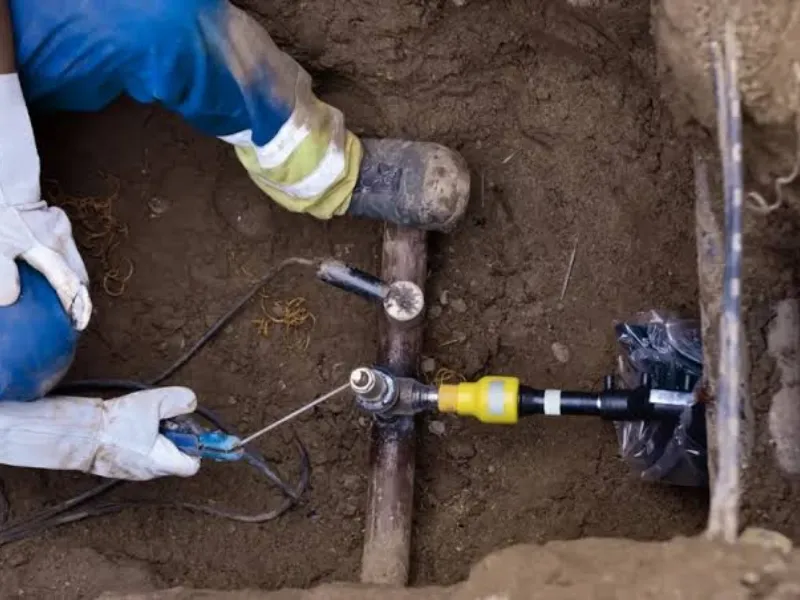
A plumbing emergency rarely gives you time to think. A pipe lets go behind a wall, the toilet backs up into the shower, or the water heater starts dumping water across the garage floor — and every minute it runs, the damage grows. In San Diego, where many homes still have decades-old galvanized or cast-iron pipe and hard water eats away at fittings, these failures are common.
The good news is that the most important work happens before a licensed plumber arrives. Shut the water off quickly, contain the mess, and stay safe around gas and electricity, and you turn a potential disaster into a repair. This guide walks through what to do — and what never to do — while you wait.
What Counts as a Plumbing Emergency?
Not every plumbing problem needs a midnight call — a dripping faucet can wait until morning. But some situations put your home or family at risk right now. Here are the true emergencies:
- A burst or ruptured pipe. Water is escaping uncontrolled and can flood a room in minutes.
- An active leak you cannot stop. A leak that keeps spreading, even after you shut it off.
- Sewage backing up into the home. Raw waste is a serious health hazard, not just a mess.
- No water at all. If every fixture is dry, you may have a failed main or broken supply line.
- A water heater that is leaking or has failed. A leaking tank can flood a garage or closet and is often near failure.
- A gas leak or the smell of gas. The most dangerous scenario of all, and always the priority.
If you are dealing with any of the above, act immediately. Anything else — a slow drain, a running toilet, a single drip — can wait for a scheduled visit, which our guide to common plumbing problems in San Diego homes covers.
The First 5 Minutes: Step-by-Step
Work through these steps in order: stop the water, make the area safe, and limit the damage until a professional arrives.
- Shut off the main water valve. Turn the handle clockwise until it stops.
- For gas, shut the gas valve only if it is safe and you are instructed to. If in doubt, leave the gas alone and get outside.
- Turn off the water heater. Cut power to the heater and, if safe, shut off electricity to any wet area.
- Contain the water. Use towels and buckets to stop the spread, and move valuables and electronics out of the path.
- Open a low faucet. The lowest faucet drains remaining pressure so less water escapes.
- Do not use chemical drain cleaners. They are caustic and dangerous when water is standing or draining slowly.
- Document the damage. Take clear photos and video before cleanup; your insurer will want them.
- Call a licensed plumber. Call A&A Plumbing at (619) 637-5215 so we can talk you through it and dispatch help.
If you smell gas or rotten eggs, skip the water steps. Leave the home immediately without touching light switches or phones inside, then call 911 and your gas utility from outside. See gas leak repair for how we make the line safe.
How to Find Your Main Water Shutoff Valve
The single most useful thing you can do today is find your main shutoff before you ever need it. It is usually in one of three places:
- Near the street or water meter, often in a concrete or plastic box at the edge of your property.
- Along the side of the house, on an exterior wall where the supply line enters.
- Inside a garage or crawlspace, especially in older San Diego homes with slab foundations.
Once you find it, turn it once to confirm the water stops, then open it back up. A valve that has not moved in years can seize when you need it most.
Gas Leaks: Safety Comes First
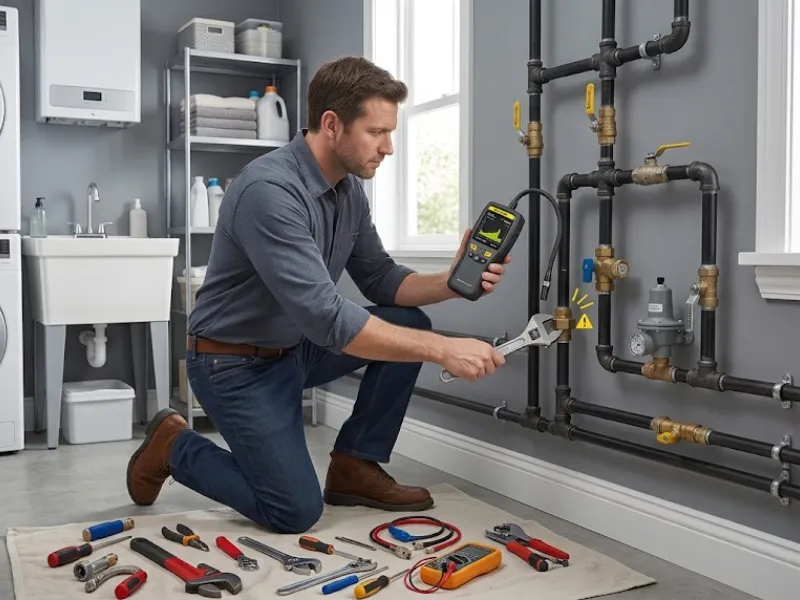
Nothing on this page matters more than gas safety. Natural gas leaks cause fires, explosions, and carbon monoxide poisoning. If you suspect a leak, your only priority is getting people out and getting professionals in.
Signs of a gas leak
- The rotten-egg or sulfur smell added to natural gas
- A hissing or whistling sound near a gas line or appliance
- Dead or dying grass in a straight line above a buried gas line
- Headaches, dizziness, or nausea that ease when you leave
What to do if you smell gas
- Leave the home immediately. Get everyone, including pets, out.
- Do not flip switches, unplug appliances, or use phones inside. A spark can ignite gas.
- Call 911 and your gas utility from outside first. Do it from a safe distance, not your doorway.
- Then call a licensed plumber for the repair once the utility has made the scene safe.
Do not try to find a gas leak yourself, and do not shut off the gas unless told it is safe. See our gas leak repair service for more.
Burst Pipe & Flooding
A burst pipe is the classic plumbing emergency because it can release hundreds of gallons of water in minutes. San Diego's hard water weakens older copper and galvanized steel from the inside, and when a pipe splits, water often pours into a wall or ceiling before you notice it.
Your immediate response
- Shut off the main water valve right away to stop the flow at the source.
- Open the lowest faucet to relieve pressure and drain the lines.
- Cut power to a flooded area at the breaker if you can reach it safely, and never stand in water near outlets.
- Move furniture, rugs, and electronics out of the water.
- Photograph everything before cleanup for your insurance claim.
If the leak is under your foundation rather than in a wall, it may be a slab leak, which needs electronic detection to locate. Warning signs include warm floor spots and a bill that jumps for no reason — see our guide to slab leak warning signs.
Sewage Backup
Sewage backing up into a home is both a plumbing emergency and a health hazard. When waste water rises through a tub, shower, or floor drain, the main sewer line is usually blocked — often by tree roots, grease, or a collapsed length of older clay or cast-iron pipe. San Diego's mature landscaping sends roots straight into aging joints.
What to do right now
- Stop using all water. Every flush or running faucet makes the backup worse.
- Do not use chemical drain cleaners; they will not clear a main-line blockage and can splash back.
- Keep children and pets away, and put on rubber gloves before touching anything.
- Turn off the water to fixtures you can isolate, and shut the main valve if the backup keeps rising.
- Call a plumber — the main line needs professional equipment to clear and inspect.
Because sewer lines are buried, the right first step is a camera inspection to see what is blocking the pipe, then the plumber can confirm whether the fix is root removal, hydro jetting, or replacement. Our leak detection and repair team carries that equipment.
No Hot Water or a Leaking Water Heater
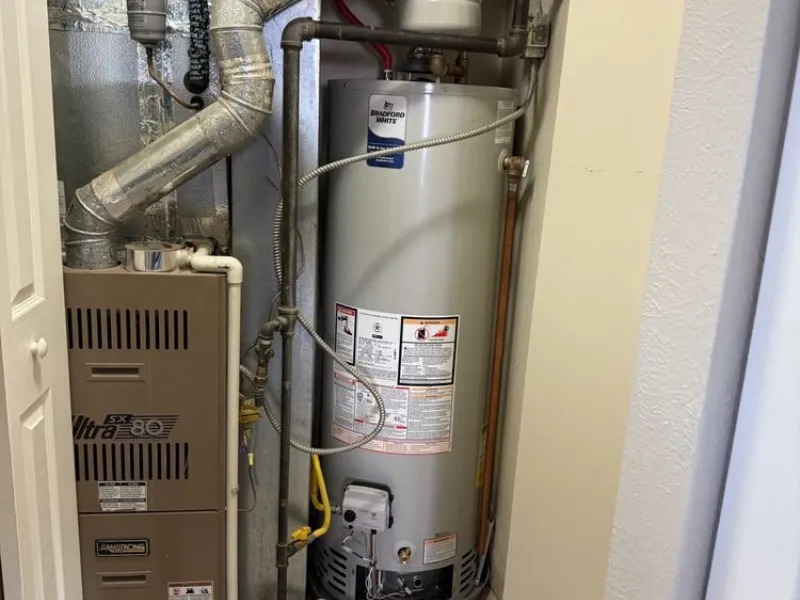
Two water heater situations count as emergencies: a tank that is actively leaking and a total loss of hot water. A leaking tank can quietly ruin flooring and drywall, and a cracked tank almost never repairs itself. In San Diego, hard water shortens water heater life because sediment builds up and corrodes the tank from within.
If your water heater is leaking
- Turn off the water valve to the heater and shut off its power at the breaker or gas valve.
- Do not try to drain or move a leaking tank on your own.
- Contain the water and move anything stored nearby out of the way.
- Call a plumber to assess whether the tank can be saved or replaced.
If you have no hot water but no leak, check the pilot light or breaker first, then call us. We handle everything from emergency repairs to full replacement through our water heater services.
A water heater that pops or rumbles is telling you sediment has built up. Flushing the tank each year can prevent a sudden failure.
What NOT to Do
In a stressful moment, it is easy to make things worse. Avoid these mistakes during any plumbing emergency:
- Don't keep using fixtures. Every flush or faucet you run adds more water to an already failing system.
- Don't ignore a small leak that is spreading. It will get worse, not settle down.
- Don't attempt major repairs you are unsure of. A wrong turn on the wrong valve can turn a repair into a flood.
- Don't use electrical devices in standing water. Stay clear of outlets, appliances, and cords in a wet area.
- Don't pour chemical drain cleaners down a backed-up line. They are hazardous and rarely fix a main-line blockage.
- Don't put off documenting the damage. Photos taken before cleanup are worth far more than a description later.
Prevention: Be Ready Before It Happens
The best emergency response starts weeks earlier. A little preparation means that when something fails, you already know exactly what to do. Here is how to be ready:
- Label your shutoff valves so anyone in the home can find them fast.
- Keep an emergency kit. Stock towels, a bucket, a flashlight, an adjustable wrench, and rubber gloves in one place.
- Test your main valve once or twice a year so you know it still stops the water.
- Schedule maintenance. Annual water heater flushes and periodic leak inspections catch small problems before they become emergencies.
- Know our number. Save (619) 637-5215 in your phone, and add your gas utility's emergency line too.
- Watch for warning signs. Unexplained spikes in your bill often point to a hidden leak, which our article on high water bills and hidden plumbing leaks explains.
A&A Plumbing offers same-day and emergency service, open Monday through Saturday from 7:00 AM to 11:30 PM. Call and we will help you stabilize the situation over the phone and get a licensed plumber to your door fast. You can also contact us online for non-urgent questions.
Frequently Asked Questions
What should I do first in a plumbing emergency?
If water is actively flooding, shut off your main water valve first — usually near the street or meter, along the side of the house, or in the garage. Then turn off the water heater and, if safe, cut power to a wet area before calling a plumber. For a gas smell, leave the home and call 911 and the gas utility from outside first.
How do I shut off the water to my San Diego house?
Locate your main shutoff valve before an emergency. It is usually near the street at the water meter, at the side of the house, or inside a garage or crawlspace. Turn it clockwise until it stops, and test it once or twice a year so you know it still works.
Is a gas leak a plumbing emergency?
Yes, and it is the most dangerous one. If you smell gas or rotten eggs, leave immediately. Do not flip switches, unplug appliances, or use phones inside. From outside, call 911 and your gas utility first, then a licensed plumber. Never try to fix a gas leak yourself.
Should I use drain cleaner during an emergency?
No. Chemical drain cleaners are caustic, can damage pipes, and are dangerous when water is backed up. Keep your hands out of the water and let a plumber clear the blockage safely.
What should I keep in a plumbing emergency kit?
Keep old towels, a bucket or two, a flashlight, an adjustable wrench for the shutoff valve, rubber gloves, trash bags, and a waterproof container for documents. Add A&A Plumbing's number, (619) 637-5215, and your gas utility's emergency number so you can find them fast.
Have a Plumbing Emergency Right Now?
A&A Plumbing serves San Diego County with same-day and emergency service, honest pricing, and a team that will talk you through the problem.
Call (619) 637-5215