How to Find a Hidden Water Leak Inside Your San Diego Home

A hidden water leak is one of the most expensive plumbing problems a San Diego homeowner can ignore. Unlike a burst pipe that floods a room, it trickles quietly inside a wall, under a slab, or behind a cabinet for months. By the time you notice, you may already have a bill spike, mold growth, or foundation damage.
San Diego homes are especially prone to hidden leaks. Much of the local housing stock was built before 1980 and still has aging galvanized steel or copper lines, and our hard water accelerates the corrosion behind pinhole leaks. Add pressure swings and soil that expands and contracts with our dry climate, and leaks stay out of sight.
The good news is that hidden leaks usually announce themselves. This guide covers the signs to watch for, where leaks hide, a DIY water meter test, and the tools used to pinpoint a leak without tearing your home apart.
Signs of a Hidden Water Leak
Hidden leaks rarely look like a leak. Instead, they show up as small changes that are easy to explain away until you connect the dots. Watch for these warning signs; more than one together is a strong signal.
- An unexplained high water bill. If usage hasn't changed but the bill jumped, water is escaping somewhere. Often the first sign homeowners notice.
- A water meter that keeps moving. With every fixture and appliance off, the meter should be completely still. A moving meter means water is flowing to a leak.
- The sound of running water when the house is quiet. Stand still near a wall or floor late at night. A faint hiss or trickle with nothing running points to a nearby leak.
- Warm spots on the floor. A warm patch on a slab floor often points to a hot-water line leaking beneath the concrete.
- Damp, stained, or discolored drywall and baseboards. Water stains, soft spots, and peeling or bubbling paint along a wall or ceiling mean moisture is behind the surface.
- A musty or mildew smell. A persistent damp, earthy odor in a room that never gets wet is a classic hidden-leak clue.
- Bubbling or buckling paint. Paint that bubbles or lifts off the wall is usually being pushed out by moisture behind it.
- Cracked or shifting flooring. New cracks in tile or hardwood, or a floor that feels uneven, can indicate water under the slab.
- A water bill that rises for two or more cycles with no usage change
- A musty smell you cannot trace to a single room
- Warm floor spots, especially in a kitchen, bathroom, or hallway
- Paint or baseboards that are soft, stained, or bubbling
If any sound familiar, our post on what a high water bill says about hidden plumbing leaks covers the most common culprits, and our guide to slab leak warning signs in San Diego focuses on warm floor spots.
Where Hidden Leaks Hide in San Diego Homes
Once you know a leak exists, the next question is where. Across San Diego County, hidden leaks cluster in a handful of predictable places.
Behind walls and ceilings
Supply lines run through wall cavities and across ceilings. A pinhole leak drips onto drywall, insulation, and framing for months. Stains, soft drywall, and a musty smell near a bathroom or kitchen wall are the usual tells.
Under the concrete slab
Many San Diego homes have water and drain lines buried beneath a concrete slab. When one of those pipes fails, water seeps into the soil under the house. Warm floor spots, a sudden bill spike, and the sound of running water are the classic signs. A slab leak is serious because it can erode and shift the soil supporting your foundation. You can learn more on our slab leak services page.
Toilet flappers and fill valves
A worn flapper or a fill valve that won't shut off lets water trickle from the tank into the bowl continuously. It makes almost no noise, can waste hundreds of gallons a day, and is one of the cheapest hidden leaks to fix.
Supply lines under sinks
The supply lines and shutoff valves under sinks are under constant pressure. A slow drip soaks the cabinet floor, warps the wood, and feeds mold long before it becomes visible.
Water heater connections
Water heater leaks usually start at the inlet, outlet, or relief valve. Because the heater sits in a garage or closet, a slow drip can go unnoticed and quietly rust the base and framing.
Irrigation lines and hose bibs
Buried irrigation lines and spigots take a beating from soil movement and sun. A broken line can run up your bill for weeks before a soggy patch of lawn reveals it.
Pool equipment
Pool pumps, filters, and their plumbing develop leaks at fittings and valves. Because a pool always loses some water to evaporation, a real leak is easy to overlook until the pump runs dry.
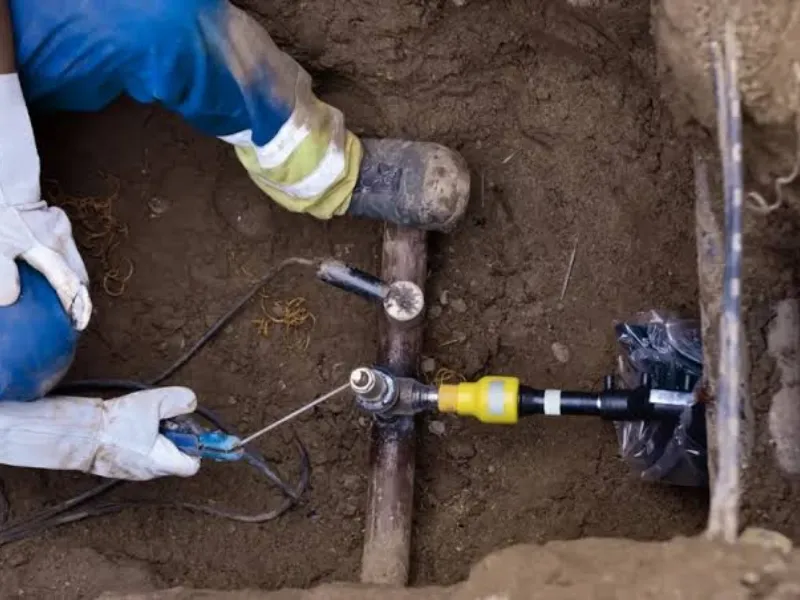
The DIY Water Meter Test
Before calling anyone, you can confirm a leak with a simple test using your own water meter. It takes about an hour and costs nothing.
- Turn off every fixture and appliance that uses water: faucets, showers, toilets, dishwasher, washing machine, ice maker, and any outdoor spigots or irrigation.
- Make sure the irrigation system and pool equipment are not on a timer that will run during your test.
- Find your water meter, usually in a concrete box near the sidewalk or at the edge of the property.
- Write down the current reading, or note the exact position of the sweep hand or leak indicator.
- Wait 30 to 60 minutes without using any water at all.
- Read the meter again. If the number changed or the indicator moved, water is flowing and you have a leak.
- If you want to narrow it down, close the main shutoff valve and repeat. If the meter still moves with the main closed, the leak is on the service line between the meter and your home.
Many newer San Diego meters have a small triangular leak indicator that spins at the slightest flow. It is more sensitive than the main dial, so watch it closely.
If the meter stays still, the problem may be intermittent, such as a toilet that only leaks after a flush or an irrigation zone that runs on certain days. If it moves, you have confirmed a leak.
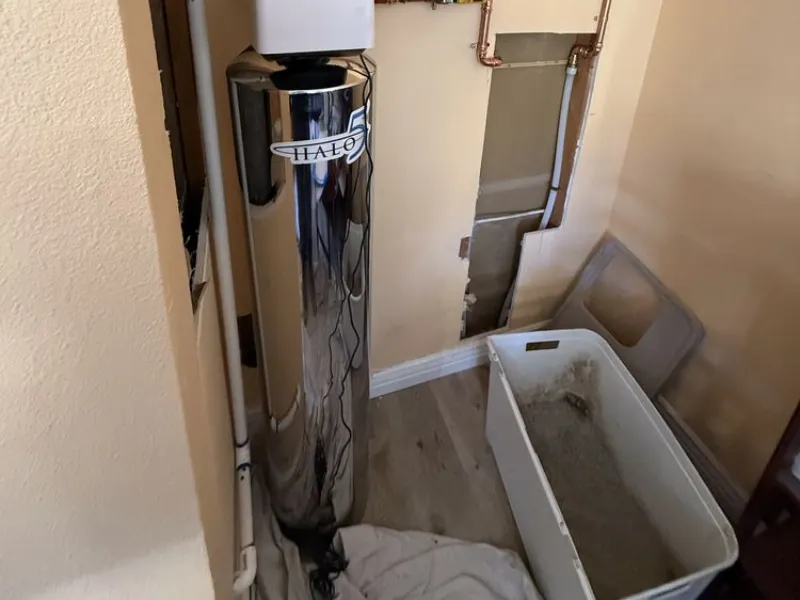
How Professionals Find Hidden Leaks
Once a leak is confirmed, the challenge is locating it precisely so repair is targeted instead of exploratory. Randomly breaking into walls and floors is destructive, so licensed plumbers use tools that hear, see, and measure a leak through the surfaces hiding it.
Acoustic listening
Water escaping a pressurized pipe makes a distinct sound. Using sensitive microphones and ground-listening equipment, a technician can follow it to the leak's general area, even through a slab or wall.
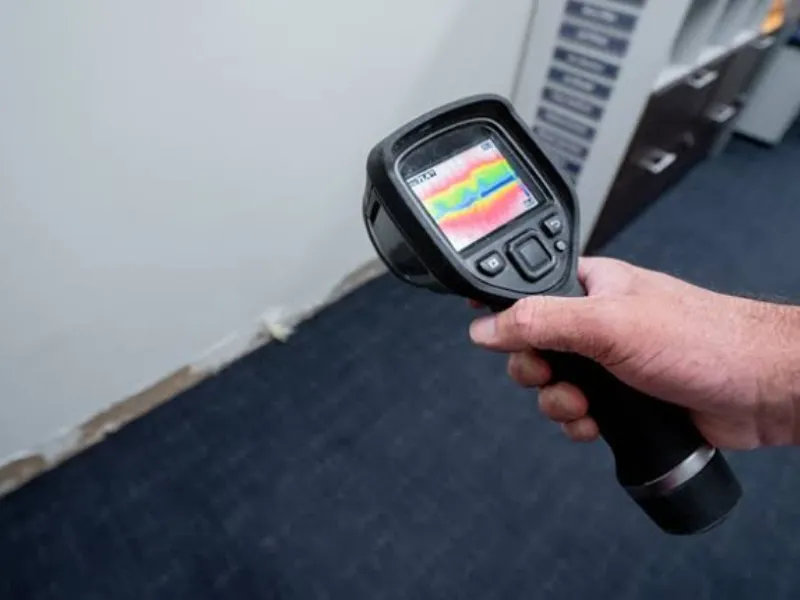
Thermal imaging
An infrared camera reveals temperature differences the eye cannot see. A hot-water leak shows as a warm signature, a cold-water leak as a cooler area, tracing leaks behind walls and floors without cutting.
Pressure testing
By isolating and pressurizing sections of the system, a plumber can determine which line is leaking and separate a water leak from a drain or irrigation leak, narrowing the search.
Tracer gas
For leaks acoustic and thermal tools cannot confirm, a safe, non-toxic tracer gas is introduced into an isolated line. It escapes at the leak point and is detected at the surface, pinpointing the location accurately.
In-line camera inspection
For drain and sewer leaks, a flexible camera pushed through the pipe shows the line's interior in real time, revealing cracks, root intrusion, offsets, and corrosion.
A&A Plumbing combines these methods through our water leak detection and repair service to locate the leak with minimal disruption and recommend the least invasive repair.
Why Early Detection Saves Thousands
The cost of a hidden leak is rarely the leak itself. It is the damage the water does while hidden. Finding and fixing a leak early keeps a modest repair from becoming a major project.
- Water waste. A slow leak can waste thousands of gallons a month, which adds up on every bill in a drought-prone region like San Diego.
- Mold and air quality. Damp drywall, insulation, and framing are ideal conditions for mold. Remediation costs far more than the plumbing fix and can affect your family's health.
- Foundation damage. A slab leak erodes and shifts the soil under your home. Foundation repair is one of the costliest repairs a homeowner can face.
- Structural rot. Sustained moisture rots framing, subfloors, and cabinetry, weakening the structure and forcing replacement of sound materials.
- Higher repair bills. The longer a leak runs, the larger the affected area and the more material has to be opened, dried, and restored.
Compared with mold remediation, foundation work, or even a few months of wasted water, early detection is one of the cheapest forms of home insurance available.
When to Call A&A Plumbing
Some leaks are worth a quick look yourself, but others need professional detection right away. Call A&A Plumbing at (619) 637-5215 if any of the following are true:
- The meter is still moving. If the meter advances after you shut off every fixture, the leak is real and needs locating.
- You find damp or stained areas. Any wet drywall, soft baseboards, bubbling paint, or persistent musty smell points to moisture behind a surface.
- You notice slab signs. Warm floor spots, new cracks in flooring, or a floor that feels uneven should be checked immediately.
- Your bill keeps climbing. A rising bill with no change in habits reliably indicates water is being lost.
- You hear running water. A constant hiss or trickle when the home is quiet should not be ignored.
If you are weighing whether a plumbing issue is a quick fix or a bigger job, our overview of common plumbing problems in San Diego homes can help.
A&A Plumbing offers professional leak detection and repair throughout San Diego County with upfront pricing and same-day service. We locate the leak and repair it with minimal disruption.
Frequently Asked Questions
How can I tell if I have a hidden water leak?
The most reliable signs are a water bill that climbs with no usage change, a meter that keeps moving with every fixture off, the sound of running water when the house is quiet, musty odors, and damp or stained drywall and flooring. Warm floor spots suggest a slab leak. If the meter still moves after a shut-off test, the leak is real and a professional should locate it.
Why is my water bill high but I see no leak?
The biggest hidden wasters are a running toilet flapper, a leaking fill valve, supply lines behind cabinets, water heater connections, irrigation lines, hose bibs, and pinhole leaks inside walls or under the slab. None produce a visible puddle, so the water is lost silently.
Can a hidden water leak cause mold or foundation damage?
Yes. A slow leak keeps materials damp, feeding mold inside walls and cabinets and rotting wood framing. Under a slab, escaping water erodes and shifts the soil beneath the foundation, causing cracks and uneven floors. Mold remediation and foundation repair cost far more than fixing the leak early.
How do plumbers find leaks without breaking into walls?
Licensed plumbers use acoustic listening to hear escaping water, thermal imaging to spot temperature differences, pressure testing to isolate the failing line, tracer gas to confirm hard-to-find leaks, and cameras to inspect pipes. These tools pinpoint the leak so repair is targeted instead of exploratory.
When should I stop troubleshooting and call a plumber?
Call A&A Plumbing at (619) 637-5215 if the meter is still moving after you shut off every fixture, if you see damp or bubbling areas inside, or if you notice warm floor spots, cracked flooring, or a sudden bill spike. Early detection keeps a small repair from becoming a mold or foundation project.
Think You Have a Hidden Leak?
A&A Plumbing serves San Diego County with professional leak detection, honest upfront pricing, and same-day service. We’ll find the source and explain your repair options before any work begins.
Call (619) 637-5215