How Often Should You Flush a Water Heater in San Diego?
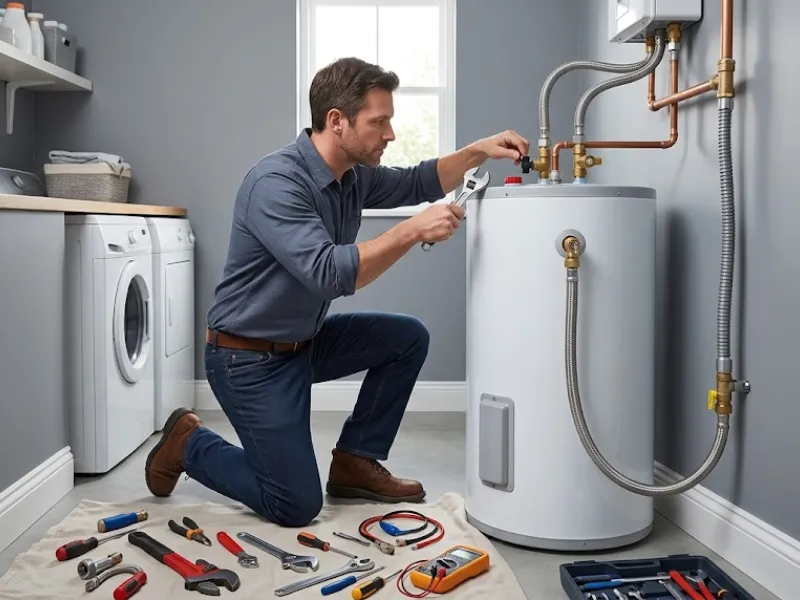
If you live in San Diego, your water heater works harder than almost any other water heater in the country. The City of San Diego reports tap water averaging roughly 16 to 18 grains per gallon (gpg), and on-site tests across the county often read 16 to 25 gpg. The U.S. Geological Survey calls anything above 10.5 gpg “very hard,” so our supply sits firmly in that range. All of that dissolved calcium and magnesium has to go somewhere, and inside a hot water tank it settles out as sediment.
Flushing the tank is the routine maintenance that removes that sediment before it hardens. This guide covers how often San Diego homeowners should flush a water heater, the warning signs that yours is overdue, a step-by-step flush you can follow, how tankless units differ, and when it makes more sense to call A&A Plumbing at (619) 637-5215.
Why Water Heater Flushing Matters in San Diego
Sediment is the enemy of a tank water heater. When hard water is heated, dissolved minerals precipitate out of solution and drop to the bottom of the tank, where they form a crusty layer of scale. That layer does real damage over time:
- It insulates the burner. Sediment sits between the flame or element and the water, so heat has to pass through rock-hard scale before it reaches anything useful.
- It raises energy bills. The heater runs longer and more often to reach the temperature you set, and you pay for every extra minute.
- It causes noise. Trapped water boiling under the sediment produces the rumbling, popping, and banging that sends homeowners searching for answers.
- It shortens the tank's life. Overheating and internal corrosion wear through the steel liner. A tank that should last 10 to 15 years in a soft-water city commonly fails at 8 to 12 years here.
Flushing drains the tank and washes that loose sediment out of the drain valve before it can bake onto the bottom and turn into permanent scale.
A whole-house water softener removes the calcium and magnesium before they ever reach the heater, which slows sediment buildup dramatically. For many homes it is the difference between flushing once a year and struggling with scale every few months.
How Often Should You Flush a Water Heater?
The short answer for San Diego is once a year. That annual cadence keeps sediment from hardening and is the schedule most manufacturers assume when they set a tank's expected service life. Because our water is so hard, skipping a year matters more here than it would in a soft-water region.
Annual flushing is the baseline
Mark one month a year, inspect the tank, drain it fully, and check the anode rod while you are at it. Homes with a water softener can often stretch comfortably to the full 12 months, while homes without one should treat the annual flush as a firm minimum.
Every 6 to 12 months for heavy-use homes
Some San Diego plumbers recommend flushing every 6 to 12 months when a household uses a lot of hot water. Consider the shorter interval if you have a large family, frequently run a spa or soaking tub, use a recirculating hot-water loop, or have already heard rumbling from the tank. More hot water means more mineral precipitation, so the sediment accumulates faster.
If you cannot remember the last time your water heater was flushed, it is overdue today. A tank that has never been serviced is best handled by a professional for the first drain, since decades of hardened scale can clog the valve or reveal a leak once the pressure changes.
Signs Your Water Heater Is Overdue for a Flush
Sediment gives plenty of warning before it causes a failure. Watch and listen for these signs:
- Rumbling, popping, or banging. The classic symptom. Water trapped beneath the scale boils and bursts through, creating the noise.
- Less hot water than before. The tank recovers more slowly, so showers run cold sooner even though nothing else changed.
- Rising energy or gas bills. A sediment-coated heater burns more fuel to do the same job.
- Rusty or cloudy hot water. Discolored hot water can mean corrosion inside the tank or a spent anode rod rather than sediment alone.
- Moisture or rust around the base. This is a more serious warning that the tank itself may be failing and should be inspected promptly.
Noise and rising bills usually point to sediment that a flush can still remove. Rusty water and dampness at the base may mean the tank is already failing, in which case our guide to water heater repair and replacement signs can help you decide between a service call and a new unit.
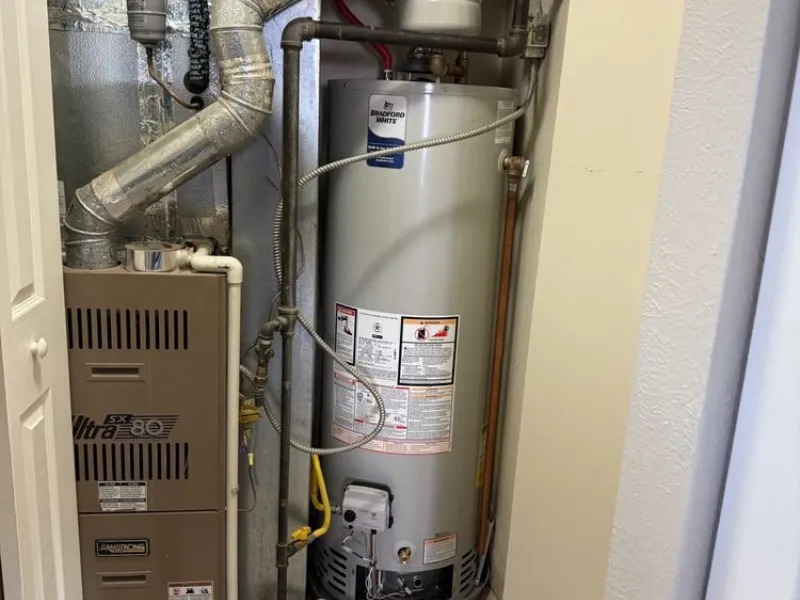
How to Flush a Tank Water Heater: Step by Step
Flushing a tank water heater is a safe DIY job for most homeowners as long as you follow the safety steps in order. You will need a garden hose long enough to reach a floor drain, driveway, or other safe outdoor area, plus gloves and eye protection.
- Shut off the power or gas. For an electric heater, switch off the breaker. For a gas heater, turn the gas control valve to “Pilot” or “Off.” Never drain a tank while it is still heating.
- Turn off the cold water supply. Close the shutoff valve on the cold inlet pipe at the top of the tank.
- Connect a hose to the drain valve. Screw a garden hose onto the spigot at the bottom of the tank and hand-tighten it.
- Run the hose to a safe location. Route the other end to a floor drain, driveway, or curb. The water will be hot at first and may contain sediment.
- Open a hot-water tap. Open a hot faucet somewhere in the house to break the vacuum and let the tank drain freely.
- Open the drain valve and let it run. Drain the tank until the water coming out runs clear instead of cloudy or gritty.
- Briefly open the cold inlet to stir sediment. Crack the cold supply valve for a few seconds to swirl water across the bottom of the tank, then close it and let it drain clear again. Repeat once or twice.
- Close the drain valve and remove the hose. Shut the spigot tightly and disconnect the hose once the flow stops.
- Refill the tank. Open the cold supply valve fully and let the tank fill. Leave the hot tap open until water flows steadily with no air sputtering, then close it.
- Restore power or gas. Only after the tank is completely full, turn the breaker back on or relight the pilot according to the manufacturer's instructions.
- Water leaving the tank can scald. Keep the hose end away from people and pets.
- Never restore power or gas to an empty tank. The heating element or burner will overheat and fail.
- If the drain valve is stuck, leaking, or will not close, stop and call a plumber rather than forcing it.
If anything about the process feels unsafe for your setup, a professional flush from our water heater team is quick, tidy, and includes an inspection of the valve, anode rod, and connections while we are there.
Don't Forget the Anode Rod
Inside every tank is a sacrificial anode rod made of aluminum, magnesium, or a powered titanium style. Its job is to corrode so the steel tank does not. Once the rod is used up, the tank itself begins to rust from the inside out, and no amount of flushing will save it.
Ask a plumber to check the anode rod every few years during the flush, and plan on replacing it every three to five years, or sooner in very hard water. Replacing a worn rod is one of the cheapest ways to extend a tank's life, and it is far less expensive than an emergency replacement. If your tank has already started leaking or the rod is fused in place, replacement may be the better option.
Tankless Water Heaters Need Annual Descaling
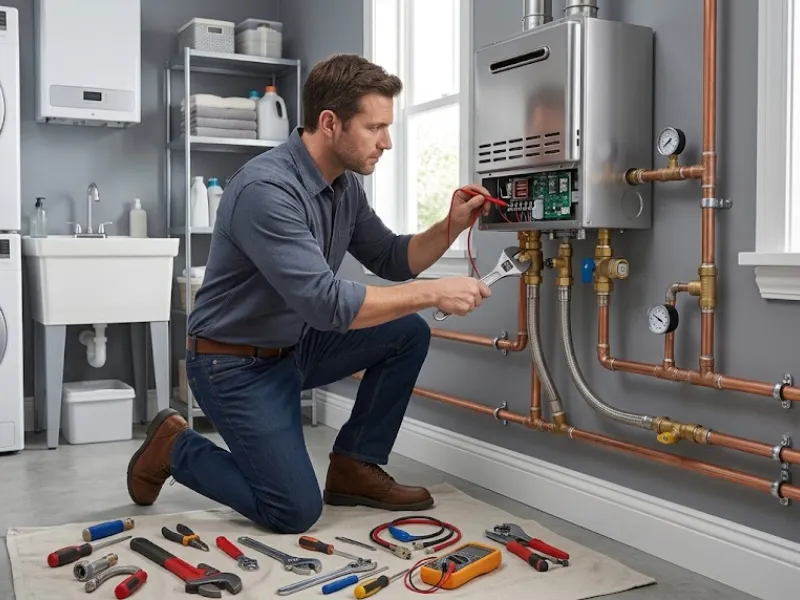
Tankless units do not have a tank to fill with sediment, but they are not maintenance-free. Hard water leaves scale on the inside of the heat exchanger, where it restricts flow, reduces efficiency, and eventually triggers error codes and temperature swings. San Diego's 16 to 25 gpg water is exactly the condition that makes descaling essential.
Descaling is different from flushing a tank. A plumber isolates the unit, connects a small pump, and circulates a descaling solution through the heat exchanger to dissolve the mineral buildup. In hard-water areas like ours, descaling should be done once a year, and many manufacturers require documented annual service to keep the warranty valid. Check your owner's manual, because skipping it can void coverage on an expensive unit.
Learn more about how these systems work in our tankless water heater guide, and if you are still choosing between the two, see tank vs. tankless water heaters in San Diego. Pairing a tankless heater with a water softener dramatically slows scale and stretches the time between descaling services.
DIY Flushing or Call a Professional?
An annual flush is well within reach for most homeowners. It requires no special tools, and the process is straightforward when the drain valve works and you can safely shut off the fuel source. It becomes a professional job in a few specific situations:
- The drain valve is stuck, stripped, or leaking. Forcing it can snap the valve and flood the area.
- The tank has never been flushed and is more than five years old. A first drain on a neglected tank can dislodge hardened scale or expose a leak, and a pro knows how to handle both.
- You are not comfortable with gas. Relighting a pilot or working around a gas valve is best left to a licensed plumber.
- You see rust, moisture, or a puddle at the base. Those signs point to a failing tank that needs evaluation, not just a flush.
- You have a tankless unit. Descaling needs a pump kit and manufacturer-specific steps, so annual professional service is the safer choice.
San Diego's water also punishes fixtures beyond the heater. If you are noticing scale on showerheads and faucets too, our post on how San Diego water hardness affects your home explains what else is at stake and how to protect it.
A Simple Water Heater Maintenance Schedule
Keep the routine small and consistent, and your water heater will return the favor with a longer, quieter, more efficient life:
- Every month: glance at the tank for moisture, rust, or drips, and listen for new noises.
- Every year: flush a tank heater, or descale a tankless unit. Test the temperature-and-pressure relief valve at the same time.
- Every 2 to 3 years: have the anode rod inspected.
- Every 3 to 5 years: replace the anode rod, or sooner if it is more than half consumed.
- Every 8 to 12 years: plan for replacement, since that is the realistic service life of a tank in San Diego's hard water.
If the tank is already noisy, rusting, or running out of hot water, maintenance has become repair. Our team can flush, service, or replace the unit and explain your options up front.
Frequently Asked Questions
How often should you flush a water heater in San Diego?
In San Diego's very hard water, a tank water heater should be flushed at least once a year. Some plumbers recommend every 6 to 12 months for large families or heavy-use homes. Tankless water heaters need annual descaling instead of draining, and skipping it can void the manufacturer's warranty.
What happens if you never flush your water heater?
Calcium and magnesium settle at the bottom of the tank as sediment. That layer insulates the water from the burner, so the heater runs longer, energy bills rise, and you hear rumbling or popping. Over time the tank overheats and corrodes from the inside, cutting its life from 10 to 15 years down to 8 to 12 years in San Diego.
Can I flush my own water heater?
Yes, most homeowners can flush a tank water heater safely with a garden hose and a few basic precautions. Call a licensed plumber instead if the drain valve is stuck or leaking, if the tank has never been serviced and is more than five years old, if you are unsure how to shut off a gas unit, or if you see moisture around the base.
Do tankless water heaters need flushing?
Yes, but tankless units are descaled rather than drained. A pump circulates a descaling solution through the heat exchanger to dissolve mineral scale. In hard-water areas like San Diego this should be done once a year, and many manufacturers require it to keep the warranty valid.
How long does a water heater last in San Diego?
A tank water heater often lasts 10 to 15 years in soft-water regions, but in San Diego homes they commonly fail at 8 to 12 years. Annual flushing and replacing the anode rod every few years are the two habits that add the most life back to the tank.
Due for a Water Heater Flush?
A&A Plumbing serves San Diego County with honest, upfront pricing and same-day service. We flush tank heaters, descale tankless units, and check the anode rod so your system lasts.
Call (619) 637-5215