Sewer Camera Inspection: What San Diego Homeowners Should Know
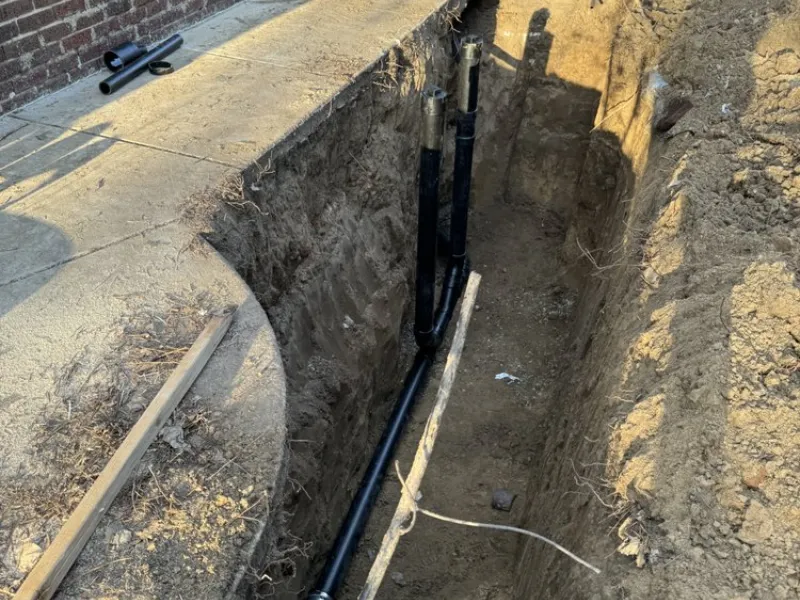
Few parts of a San Diego home are as mysterious as the sewer lateral, the pipe that carries wastewater from your house to the city main. It runs under your yard, driveway, and sometimes your foundation, so when something goes wrong there you often can't see it or reach it. Homeowners in older neighborhoods like North Park, City Heights, Kensington, and La Mesa know the feeling: a drain slows, a backup clears, and months later the same mess returns with no explanation.
A sewer camera inspection replaces guesswork with a live video look inside the line. It is fast, non-invasive, and often the difference between a small targeted repair and a needless excavation. Here is when San Diego homes need one, what it finds, and what to expect.
What a Sewer Camera Inspection Is
A sewer camera inspection uses a small, waterproof, flexible camera mounted on the end of a long push rod. A licensed plumber feeds it through an existing access point, usually the exterior cleanout near your foundation, though a roof vent or toilet flange works when there is no cleanout. The camera travels the full length of the lateral and streams real-time video to a monitor so the technician can watch the inside of the pipe as it moves.
What makes it more than a novelty is the locator. Most cameras carry a built-in sonde, a small transmitter a receiver above ground can detect, so the technician can mark the exact depth and distance of a problem on the surface. Instead of digging up the whole yard to find a break, the camera tells us precisely where the trouble sits, how far from the house, and how deep it is buried. In short, it answers three questions in under an hour: what is inside the pipe, where is the problem, and what repair will actually fix it.
When San Diego Homeowners Need a Sewer Camera Inspection
Not every slow drain calls for a camera. But when symptoms repeat or the stakes are high, an inspection is the smartest few hundred dollars you can spend. Here are the situations that most often justify one.
Recurring clogs
If you have snaked the same drain three times in a year, you are treating a symptom. Something structural, such as a belly, a root mass, or a rough, scaled inner wall, is catching debris and rebuilding the clog. The camera shows which it is.
Slow drains throughout the home
When every drain, not just one, slows at once, the problem is usually in the main lateral rather than a single branch line. A whole-house slowdown is one of the clearest signals to look inside the sewer line.
Sewage backups and gurgling
Wastewater backing up into a tub or floor drain, or toilets that gurgle after you run a sink, means the line is restricted or vented poorly. A camera reveals whether it is a partial blockage, a break, or a collapse.
Foul odors
Persistent sewer smell inside or outside the home can point to a crack, a loose joint, or a separated fitting letting gas escape. The camera confirms the source instead of masking it with deodorizer.
Before buying a home
A sewer scope is one of the best-value inspections during escrow. San Diego's older laterals are notorious for hidden damage, and knowing the true condition of the line before closing protects you from inheriting a major repair.
Before a major repair or hydro jetting
Before committing to a sewer line repair or high-pressure hydro jetting, a camera confirms the diagnosis and ensures the method fits the problem. Jetting a pipe that is already cracked or collapsed, for example, can make things worse.
After root intrusion
Once roots have found their way into a line, they come back. A follow-up camera inspection after root removal confirms the line is actually clear and flags whether the entry point needs a permanent fix.
Older homes with clay or cast-iron pipe
Much of San Diego was built between the 1920s and 1970s, when vitrified clay tile and cast iron were standard. Clay is brittle and its joints invite roots; cast iron corrodes and scales from the inside. Both are prime camera candidates.
If your home has no exterior cleanout, we can often run the camera through a toilet flange or roof vent. Installing an accessible cleanout is also a worthwhile upgrade that makes future service far easier.
What a Sewer Camera Inspection Finds Inside Your Line
The camera shows the actual condition of the pipe. These are the problems we most often uncover in San Diego sewer laterals.
- Tree roots. Roots slip through joints and cracks, forming a mass that snags waste and causes backups. Ficus, sycamore, and eucalyptus are common offenders.
- Cracks and fractures. Brittle clay pipe can crack with ground movement or age, giving roots and soil an entry point.
- Offset or broken joints. When pipes settle at different rates, joints separate or offset, catching debris and allowing infiltration.
- Bellies and sags. A dip in a section of pipe holds water and debris, so clogs form again and again in the same spot.
- Scale and grease buildup. Hard San Diego water leaves mineral scale, and grease clings to it, narrowing the pipe from the inside.
- Debris and foreign objects. Wipes, toys, and construction debris that snaking cannot clear become visible on camera.
- Collapsed sections. A fully crushed pipe will not clear with jetting or cables and needs repair or replacement.
- Pipe material and condition. The camera confirms whether you have clay, cast iron, PVC, or Orangeburg and rates the line's overall condition.
| Finding | What the Camera Shows | Typical Next Step |
|---|---|---|
| Tree roots | Hair-like tendrils to thick root mats at joints | Cabling, hydro jetting, or root control |
| Cracks and fractures | Splits or missing chunks of pipe wall | Spot repair, lining, or replacement |
| Offset / broken joints | Misaligned or separated pipe sections | Joint repair or pipe replacement |
| Bellies / sags | Low spots holding standing water | Water jetting plus repair or re-grade |
| Scale and grease | Rough, narrowed pipe walls | Professional hydro jetting |
| Debris / objects | Visible foreign material blocking flow | Retrieval or jetting |
| Collapsed section | Flattened or crushed pipe | Trenchless or traditional replacement |
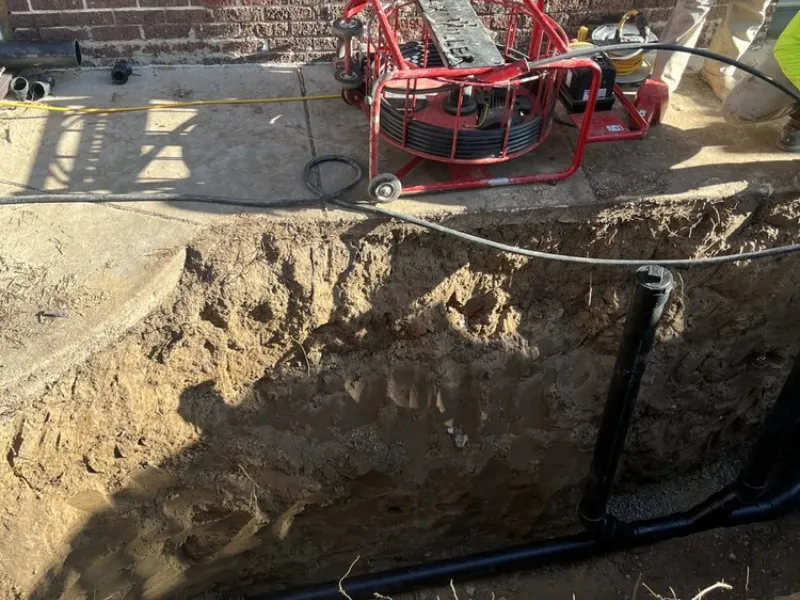
What to Expect During the Inspection
A sewer camera inspection is a clean, straightforward appointment, usually done in well under two hours for a typical home.
No digging required
The inspection never requires excavation. The camera enters through the cleanout or another existing access point, so your yard and landscaping stay untouched. Digging becomes relevant only if the camera finds damage that needs a repair.
Step by step
- The plumber locates the cleanout and removes the cap.
- The camera is fed into the lateral while the monitor records the run.
- The technician notes the distance of each finding.
- A locator marks the surface position of any problem area.
- You get a clear explanation, and often a copy of the video.
The report
Good inspections come with a written summary: pipe material, length, condition, and a list of findings with their distances. That documentation is especially valuable for insurance claims or real estate transactions.
- Multiple slow drains that never fully clear
- Gurgling toilets or drains
- Sewage odors inside or near the yard
- Soggy or unusually green patches above the line
- Repeated backups in the lowest fixtures
Why a Sewer Camera Inspection Is Worth Doing
Consider what the inspection saves you.
- An accurate diagnosis. It replaces guesswork with direct evidence, so you know exactly what is wrong before spending on a fix.
- No unnecessary excavation. Pinpointing a problem lets a repair be a targeted spot fix or trenchless method rather than a torn-up yard.
- Documentation for transactions. Video and a written report support insurance claims and real estate negotiations with facts, not opinions.
- Guidance for the right repair. A camera tells us whether jetting, a spot repair, trenchless lining, or replacement is appropriate.
- Peace of mind. For a small fee, you get certainty about a hidden, expensive part of your home.
Sewer Camera Inspection Cost in San Diego
In the San Diego market, a sewer camera inspection commonly runs around $150 to $500. The price depends mainly on the length of the lateral, the number of access points, and whether the technician has to install or clear a cleanout first. A short, easy-to-reach line sits at the low end; a long run or difficult access point sits higher.
The important detail is that the inspection fee is often credited toward the repair if you move forward with the recommended work, turning a standalone cost into part of the project budget.
| Factor | Effect on Price |
|---|---|
| Length of the lateral | Longer runs take more time and footage |
| Access points | Hard-to-reach or missing cleanouts add cost |
| Additional cameras or locators | Specialty locating equipment adds a modest amount |
| Report and video | Some companies charge for documentation; many include it |
A camera inspection is diagnostic, not a repair. If it reveals a problem, we explain your options with upfront pricing before any work begins.
From Diagnosis to the Right Repair
Once the camera shows what is happening, the next step depends on what it found. A root intrusion might be managed with cabling or hydro jetting and a follow-up inspection, covered in our guide to tree roots in sewer lines. A cracked or collapsed section usually calls for sewer line repair, and in many cases trenchless methods can restore the pipe without a full excavation.
If recurring clogs are your main complaint and the camera shows scale rather than structural damage, the cause may be the hard water scale we see across the county trapping debris. Our post on why drains keep clogging explains how to break that cycle.
Whatever the finding, the value is the same: you decide based on what is actually inside the pipe. If you are dealing with backups, slow drains, or buying an older San Diego home, call A&A Plumbing at (619) 637-5215 and we will scope the line and walk you through the findings.
Frequently Asked Questions
What is a sewer camera inspection?
A sewer camera inspection pushes a waterproof, flexible camera through your cleanout and into the sewer lateral. It streams real-time video to a monitor, and a locator measures the distance and depth of any problem so it can be pinpointed without digging up the yard.
How much does a sewer camera inspection cost in San Diego?
In San Diego, a sewer camera inspection commonly costs around $150 to $500, depending mostly on the length of the lateral and how many access points are needed. Many plumbers, including A&A Plumbing, credit the inspection fee toward the repair if you move forward with the recommended work.
Do you have to dig up my yard for a sewer camera inspection?
No. The camera is inserted through an existing cleanout, roof vent, or toilet flange, so the inspection itself requires no digging. Excavation only comes into play later if a repair is actually needed, and the camera footage often helps keep that repair far more targeted.
Should I get a sewer scope before buying a San Diego home?
Yes. Many San Diego homes were built before 1980 with clay or cast-iron sewer laterals that are prone to root intrusion, offset joints, and cracks. A sewer scope before closing documents the true condition of the line and can protect you from inheriting a five-figure repair.
How often should I get a sewer camera inspection?
Most homes do not need one on a schedule. Consider a camera inspection every few years if you have an older home with clay or cast-iron pipe, mature trees over the sewer line, or a history of recurring clogs. Otherwise, schedule one at the first sign of slow drains or backups.
Suspect a Sewer Problem in San Diego?
A&A Plumbing serves San Diego County with honest, upfront pricing and same-day service. We’ll run the camera, show you what we find, and explain your options before any work begins.
Call (619) 637-5215