Why Do My Drains Keep Clogging? Causes and Long-Term Solutions
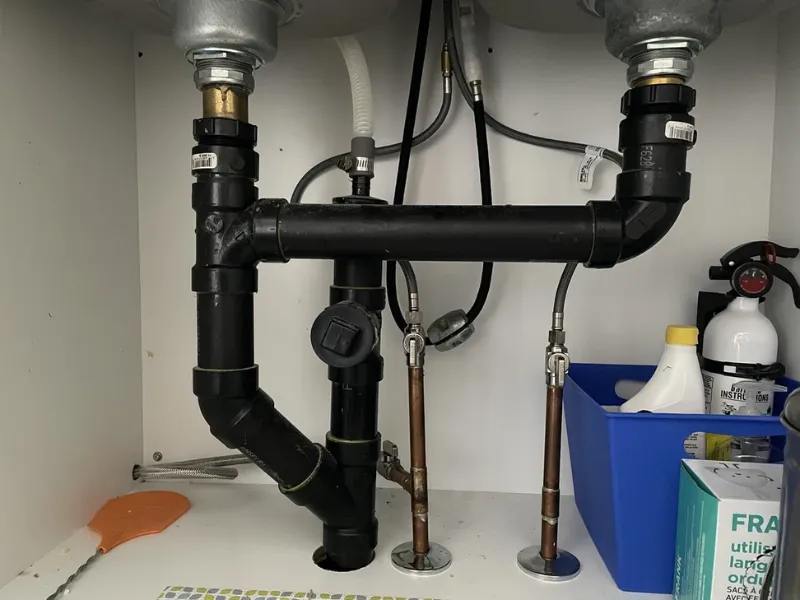
You plunge the kitchen sink, pour in a little drain cleaner, and the water finally goes down. Two or three weeks later, the same drain is gurgling and backing up again. If that sounds familiar, you are not doing anything wrong — you are treating a symptom. A drain that clogs once is an accident. A drain that clogs again and again is telling you something about the condition of the pipe itself.
San Diego homeowners deal with this more often than most, because our water is unusually hard and much of our housing stock is older than the pipes were ever designed to last. In this guide we'll explain why clogs come back, what makes San Diego's water such a big part of the problem, how kitchen and bathroom clogs differ, when a recurring clog is actually a sewer line emergency, and which long-term fixes and prevention habits genuinely work.
Why Clogs Come Back
When a drain slows, most people picture a solid plug of debris sitting in the pipe. In reality, a recurring clog is usually something more like a rough, coated pipe wall. Debris catches on that rough surface, builds up, and eventually closes off the flow. If you clear the debris but leave the rough surface behind, the next bit of hair or grease catches just as easily — and the cycle starts over.
That is why a plunger or a store-bought drain cleaner only buys you time. Both attack the debris; neither restores the pipe wall to a smooth, non-stick surface. Recurring clogs almost always trace back to one of these conditions:
- Mineral scale coating the inside of the pipe, especially in San Diego's hard water.
- Grease and food that cools and hardens on the pipe walls in kitchen drains.
- Hair and soap scum that knit together into a mat in bathroom drains.
- Rusted or flaking cast iron in older homes, which creates a permanently rough surface.
- Tree roots in the sewer lateral, which regrow after any partial clearing.
- Poor habits, like flushing wipes or skipping strainers, that keep feeding the problem.
The takeaway is simple: to stop a drain from clogging again, you have to fix the condition of the pipe, not just the blockage inside it. We cover how to tell which condition you're facing throughout this article, and our broader guide to common plumbing problems in San Diego homes puts recurring clogs in context with the other issues we see most.
The San Diego Factor: Hard Water Scale
Here in San Diego, the single biggest reason drains keep clogging is the water itself. Our supply travels hundreds of miles from the Colorado River and Northern California, picking up dissolved calcium and magnesium along the way. The result is some of the hardest municipal water in the country, averaging roughly 16 to 18 grains per gallon across the city — well above the 10.5 gpg line the USGS classifies as “very hard.” Inland and East County areas often test even higher.
Those dissolved minerals don't stay dissolved. As water sits, evaporates, or passes through a drain, some of the calcium and magnesium settles out and bonds to the pipe wall as a hard deposit called scale or limescale. Over months and years, that layer builds up and turns a slick pipe into a gritty, sandpaper-like surface.
Scale doesn't clog a drain by itself. It makes the pipe wall rough, so hair, soap scum, grease, and food stick instead of washing through. Clear the clog without removing the scale, and it comes right back.
You may already recognize hard water elsewhere in your home: white crust around faucets, cloudy glasses, soap that won't lather, and a filmy feeling on skin and hair. Those same minerals are lining your drains, your supply pipes, and your water heater. This is why the most durable long-term solution for recurring clogs isn't a stronger snake — it's reducing the minerals at the source with a whole-house water softener sized for San Diego's water, combined with periodic professional cleaning to remove the scale that has already built up.
Kitchen vs. Bathroom Clogs
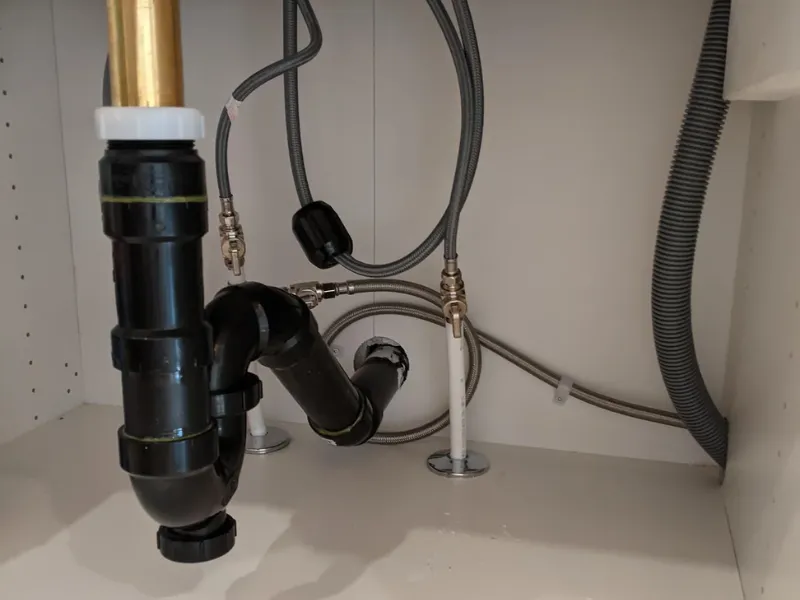
Kitchen and bathroom drains clog for different reasons, and knowing which one you're dealing with points you toward the right fix. A kitchen plumbing clog behaves very differently from a bathroom plumbing clog.
Kitchen drains: grease and food
Kitchen sink clogs are almost always about grease, oil, and food. Cooking grease feels liquid when it's hot, which is why it seems safe to pour down the drain. Once it cools a few feet down the pipe, it conies and hardens into a sticky, wax-like coating. Coffee grounds, eggshells, rice, and fibrous vegetable scraps then stick to that coating and build up. Add a layer of mineral scale and the drain narrows fast.
- Pour used cooking oil into a sealed container and throw it in the trash — never down the drain.
- Wipe greasy pans and plates with a paper towel before washing.
- Run hot water for 30 to 60 seconds after using the sink to keep residual grease moving.
- Use a mesh strainer to catch food particles before they enter the pipe.
Bathroom drains: hair and soap scum
Bathroom clogs are a different animal. Hair is the primary culprit, and it acts like a net, catching soap scum, toothpaste, and skin cells until it forms a dense mat. Because hair resists dissolving, plunging often just moves the mat around. In a hard-water home, the underlying scale gives that hair something to grip, so bathroom drains can clog surprisingly quickly even in households that are otherwise careful.
Shower and tub drains are the most common offenders, followed by bathroom sinks where toothpaste and soap collect. A cheap mesh or hair-catcher strainer over every shower and sink drain is the single most effective thing you can do to slow this down — far more effective than any chemical treatment.
When It's the Sewer Line (Roots and Cast Iron)
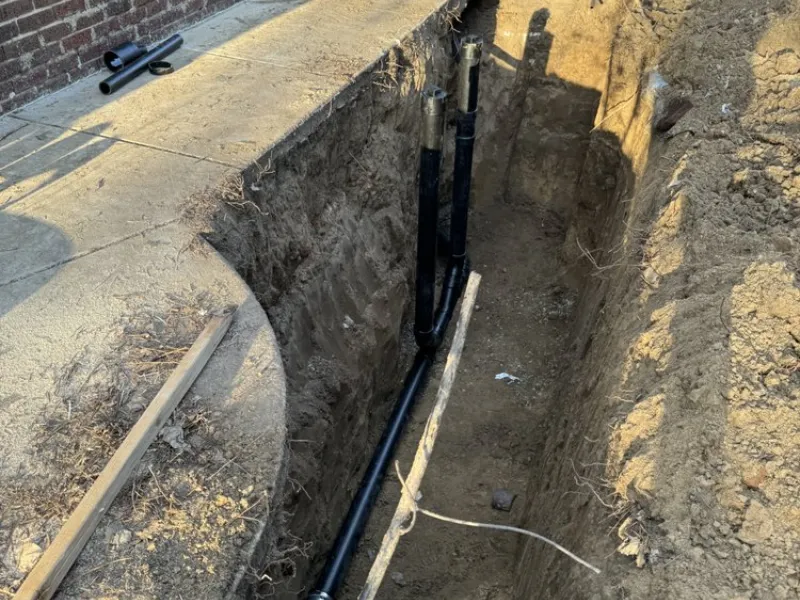
Sometimes a recurring clog isn't in the fixture drain at all. When several drains slow down at once, or when the lowest drains in the house back up first, the problem is in the main sewer line. Two causes dominate in San Diego.
Tree roots in the lateral
San Diego's mature trees and landscaping are one of the things that make the region beautiful, but their roots are relentless. Roots seek out the moisture and nutrients inside a sewer line, slipping through the smallest cracks and joints in older clay or cast-iron pipe. Once inside, they grow into a fibrous mass that snags waste and causes backups. Snaking cuts the roots, but it doesn't kill them — they regrow, often within a year, which is exactly why the clog returns. Our guide to tree roots in sewer lines covers the signs and the lasting solutions.
Rusted and flaking cast iron
Many homes built before the 1980s still have original cast-iron drain lines. Cast iron doesn't just clog — it corrodes from the inside, flaking into rough tubercles that grab every bit of debris passing by. A cast-iron drain that has scaled and rusted will clog again and again no matter how many times it's cleared, because the surface itself is the problem. In severe cases, the pipe may be bellied, cracked, or partially collapsed, which no amount of cleaning can fix.
- Multiple slow drains, especially the lowest fixtures in the home
- Gurgling toilets after a sink or shower runs
- Foul sewer odors inside or in the yard
- Soggy patches or unusually green grass above the sewer line
- Sewage backing up into tubs or floor drains
These symptoms can signal root intrusion, a bellied line, or a collapsed pipe — a much bigger problem than a single clogged drain, and one that only gets more expensive with time. A sewer camera inspection is the fastest, least invasive way to see exactly what's happening inside the pipe. If the line is damaged beyond cleaning, options range from hydro jetting and root removal to a trenchless pipe lining or replacement.
Drain Cleaning Methods Compared
Not all drain cleaning is equal. Some methods clear a one-time blockage; others actually address the condition of the pipe. Here's how the most common options stack up.
| Method | Best For | Removes Scale? | Lasting Result? |
|---|---|---|---|
| Plunger | Soft, nearby blockages in a toilet or sink | No | No — temporary only |
| Hand snake / auger | A one-off clog reachable from the fixture | No | No — breaks a hole, doesn't clean walls |
| Chemical drain cleaner | Very light, occasional clogs (with caution) | No | No — risky for pipes and people |
| Professional drain cleaning / augering | Stubborn blockages and main-line clogs | Partially | Good — clears the full run |
| Hydro jetting | Recurring clogs, grease, scale, and roots | Yes | Best — scours full pipe diameter |
| Sewer camera inspection | Diagnosing roots, bellies, cracks, collapse | N/A (diagnostic) | Essential before repair decisions |
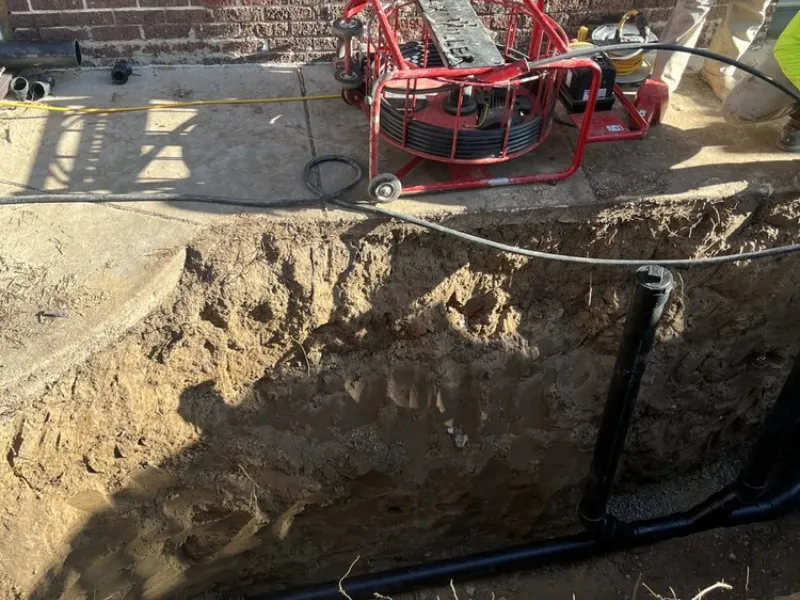
For a one-time, isolated blockage, a plunger or hand snake is fine. Just be careful with chemical cleaners: they can damage older cast-iron and some plastic pipes, they rarely remove scale, and they create a burn hazard for anyone who later works on the line. For clogs that keep coming back, hydro jetting versus traditional drain cleaning is the comparison that matters — hydro jetting uses high-pressure water to scour the entire pipe diameter, stripping away scale, grease, and roots rather than just poking a hole through them.
The Long-Term Fix
If you're tired of clearing the same drain every few weeks, the answer is to treat the cause. In San Diego, that usually means two things working together: remove the scale that's already there, and stop new scale from forming.
1. Clean the pipe back to bare material
Professional hydro jetting is the most thorough way to clear a drain line. High-pressure water, delivered through a rotating nozzle, scours the full circumference of the pipe and flushes away scale, grease, soap, and roots. Unlike snaking, which only opens a channel through the blockage, jetting leaves the pipe wall clean and smooth, so it takes far longer for new debris to build up.
2. Confirm the pipe is sound
Before committing to any lasting fix, a camera inspection confirms whether the pipe is intact. If the line is cracked, bellied, or collapsing, cleaning won't hold, and repair or replacement is the real solution. Catching this early saves you from repeated emergency calls.
3. Reduce scale at the source
A water softener removes the calcium and magnesium that create scale in the first place, protecting your drains, fixtures, and water heater at the same time. It's one of the best long-term investments a San Diego homeowner can make. If you have a failing galvanized or cast-iron system, a repipe or pipelining can replace the problematic section entirely.
Ask your plumber to run a camera after hydro jetting. Seeing a clean, intact pipe on video tells you the clog should stay gone — and gives you a baseline for future inspections.
Prevention Habits That Work
Even with good water treatment, a few simple habits go a long way toward keeping drains flowing. None of these are complicated, but consistency is what makes them work.
- Install mesh strainers in every shower and sink to catch hair and food before it enters the pipe.
- Never pour grease or oil down a drain. Collect it in a container and throw it away.
- Run hot water after kitchen use for 30 to 60 seconds to keep residual grease from settling.
- Use a water softener to reduce the scale that makes pipe walls rough in the first place.
- Never flush wipes. So-called “flushable” wipes don't break down like toilet paper and are a leading cause of sewer backups.
- Schedule periodic professional maintenance so scale and debris are cleared before they become a backup.
- Get an annual camera inspection in older homes or any property with mature trees near the sewer line.
If you'd rather not think about drain maintenance until something breaks, a standing maintenance plan is the easiest option: a professional cleans the line on a schedule, catches problems early, and you skip the middle-of-the-night emergencies. When you're ready to set that up or just want a stubborn drain looked at, contact A&A Plumbing or call (619) 637-5215.
Frequently Asked Questions
Why do my drains keep clogging after I clear them?
When a clog returns within weeks, the debris was never the whole problem. In San Diego, hard water leaves calcium and magnesium scale on the inside of drain pipes, making the walls rough. Hair, soap scum, grease, and food catch on that scale and rebuild the clog. Clearing the blockage without removing the scale means it comes back.
Will chemical drain cleaner fix a recurring clog?
Chemical drain cleaners are risky and rarely a long-term fix. They can damage older cast-iron and plastic pipes, they pose a safety hazard for anyone who later snakes the line, and they dissolve only part of the blockage while leaving scale on the pipe walls. For recurring clogs, mechanical cleaning or hydro jetting is safer and far more effective.
Does hydro jetting damage pipes?
Hydro jetting does not damage sound pipes when it's done by a trained technician who matches the pressure and nozzle to the pipe material and condition. A camera inspection is often performed first to confirm the pipe is intact. Hydro jetting is the best option for recurring clogs because it scours the full pipe diameter and removes scale, grease, and roots.
Why are all my drains slow at the same time?
When several drains slow down at once, especially the lowest fixtures in the home, the problem is usually in the main sewer line rather than the individual fixture traps. Common causes are tree-root intrusion, a sagging or bellied line, or a partially collapsed pipe. A sewer camera inspection is the fastest way to see exactly what's happening.
How often should drains be professionally cleaned?
For most San Diego homes, a professional drain cleaning every one to two years is enough preventive maintenance. Homes with heavy hard water, large households, or mature trees near the sewer line may benefit from annual service and a camera inspection. Regular maintenance clears scale before it traps debris and turns into a backup.
Tired of the Same Drain Clogging Again?
A&A Plumbing serves San Diego County with honest, upfront pricing and same-day service. We'll jet the line, show you what's inside it, and explain your options before any work begins.
Call (619) 637-5215